
Breaking News Story
Oxford Mayor Restraining Order Scandal: Police Reports Expose Lies & Judicial Corruption


OXFORD, MS– A 2017 restraining order issued against journalist Matthew Reardon is now under intense scrutiny, as newly obtained police reports contradict the claims made by Rhea and Robyn Tannehill on their petition to justify the order. The evidence not only debunks allegations that Reardon was a threat, but it also reveals that Rhea Tannehill himself made a documented threat of extreme physical violence against Reardon in the courthouse on May 30, 2017—an allegation that was conveniently omitted from the Tannehills’ legal filings.
With no police evidence supporting the restraining order, and multiple proven falsehoods in the petition, the case raises serious legal and constitutional concerns about the misuse of judicial power to silence a political critic.
Police Reports Contradict the Restraining Order’s Claims
A public records request confirmed that only three police reports exist involving Reardon in May 2017, the same month the restraining order was issued. None of them provide any evidence that Reardon was dangerous, nor do they support the Tannehills’ claims of threats or harassment.
1. May 5, 2017 – Reardon Was the One Threatened
• Reardon filed a police report stating that a woman named Nicki Preuitt posted on Facebook that she would punch him in the mouth.
• There was no report of Reardon threatening anyone.
2. May 13, 2017 – No Evidence of Threatening Texts to Terry Warren
• The restraining order falsely claims that Reardon sent threatening texts to Terry Warren.
• However, the the police report classifies the incident as “harassing text messages”, not threats.
• This is a critical contradiction, proving that the restraining order contained a falsehood to justify its issuance.
3. May 25, 2017 – Reardon Lawfully Exercising His Rights
• Reardon was observed walking near the Lafayette County Courthouse carrying a flag and firearms.
• The police report explicitly states that Reardon was not acting as a threat.
• This directly contradicts #18 in the petition for the restraining order, which states that numerous people contacted the Oxford Police Department to report that Reardon was dangerous.
• In reality, no police report from May 2017 describes Reardon as dangerous.
Rhea Tannehill’s Documented Threat Against Reardon
Perhaps the most damning revelation from these reports is that Rhea Tannehill himself threatened extreme physical violence against Reardon on May 30, 2017, in the hallway outside the courtroom.
According to the Lafayette County Sheriff’s Office report, after the restraining order hearing, Reardon and Rhea Tannehill encountered each other in the hallway. Reardon called out Tannehill for lying, to which Tannehill attempted to rush at Reardon while holding a water bottle, yelling that he would “bash [Reardon’s] head in.”
“I then stepped in front of Rhea and told him to leave,” the reporting officer stated.
Despite clear documentation of Tannehill threatening violence, no restraining order was issued against him. Meanwhile, Reardon was portrayed as a threat in the court filing—despite no police report supporting that claim.
A Restraining Order Used as a Prior Restraint on Speech
The police report from May 30, 2017, also proves that the restraining order was used to silence Reardon from speaking at Oxford City Hall.
• Judge Glenn Alderson extended the restraining order after Rhea Tannehill informed him that Reardon was scheduled to speak at a City Hall meeting on June 6, 2017—the same day Robyn Tannehill was elected mayor.
• Alderson specifically instructed law enforcement that if Reardon showed up to speak, he was to be arrested.
• This is a textbook example of unconstitutional prior restraint, where the government uses legal means to prevent someone from speaking publicly.
“The timing and intent behind this restraining order are now clear,” Reardon stated. “It was never about protecting anyone. It was about silencing me at a critical political moment.”
Proven Falsehoods in the Restraining Order
These police reports completely discredit multiple claims in the restraining order petition:
• Claim: Reardon sent “threatening texts” to Terry Warren.
• Fact: The police report classifies the incident as “harassing text messages,” not threats.
• Claim: “Numerous people” contacted Oxford Police to report that Reardon was dangerous.
• Fact: Only three reports exist for May 2017, and not one describes Reardon as dangerous.
• Claim: The restraining order was necessary for protection.
• Fact: Rhea Tannehill, not Reardon, made a documented violent threat, yet no action was taken against him.
The Legal and Political Implications
This new evidence raises serious legal and constitutional concerns:
• Did the Tannehills knowingly submit false information to obtain a restraining order?
• Did Judge Alderson violate Reardon’s First Amendment rights by extending the order under political pressure?
• Was the restraining order used as a tool of political retaliation rather than a legitimate legal safeguard?
The U.S. Supreme Court has repeatedly ruled that prior restraints on speech are unconstitutional unless an extreme threat exists. The police reports show that no such threat ever existed. (New York Times Co. v. United States (1971))
A Case of Judicial Corruption?
With documented falsehoods in the restraining order petition, evidence of a physical threat made against Reardon, and a clear violation of First Amendment rights, this case raises the possibility of judicial corruption in Lafayette County.
As Reardon continues to investigate, this case could become a landmark example of how judicial power can be abused for political and personal agendas.
For now, the question remains:
Was this restraining order a legal safeguard, or was it a blatant act of judicial corruption designed to silence a political critic?


Discover more from We The People News
Subscribe to get the latest posts sent to your email.




By Don Matthews | We The People News
On Sunday afternoon, February 8, 2026, a disturbing incident occurred at The Apothecary medical marijuana dispensary in Lafayette, LA involving a disabled United States Marine Corps veteran during an acute medical crisis. The facts are not in dispute. What happened was not loud, not chaotic, and not confrontational. It was quiet, procedural, and revealing.
Matthew Reardon, a Marine Corps veteran with service-connected PTSD, entered The Apothecary with a valid medical marijuana license that he has held since September 2025. This was his first time visiting this dispensary. He was not seeking recreational use. He was seeking prescribed medication during an active PTSD episode triggered by recent events connected to years of documented government misconduct, false charges, incarceration, and systemic retaliation.
Reardon calmly explained to the staff that he was experiencing severe PTSD symptoms and needed fast-acting relief. He asked for guidance on the most effective and cost-efficient option available because he had exactly $15 accessible on his Cash App account. He was transparent about his situation. He did not ask for free medication. He asked for help navigating a system that brands itself as medical.
The lowest-priced product available was a single pre-rolled joint priced at $12.50. At checkout, Reardon was informed that the dispensary does not accept tap-to-pay. He then attempted to pay using his Cash App card. At that point, staff advised him that their payment system only processes transactions in $5 increments, meaning the $12.50 purchase would be automatically rounded up to $15. He was then told that an additional $3.50 card-processing fee would be added on top of that amount.
Reardon explained—again—that he had access to exactly $15 and no more. He explained that this medication was necessary to manage his PTSD symptoms in that moment. He asked for a supervisor.
When the manager arrived, Reardon reiterated the situation clearly and respectfully. He requested a reasonable accommodation: any adjustment that would allow him to obtain the prescribed medication without being priced out by arbitrary rounding and discretionary fees. Options existed. The price could have been adjusted. The fee could have been offset. A managerial override could have been used.
Instead, the manager stated that nothing could be changed in the system. Staff suggested Reardon leave the dispensary, go across the street, purchase another item he did not need, and attempt to obtain cash back—an impractical and dismissive suggestion given his disclosed financial and medical condition.
At no point did Reardon raise his voice, threaten staff, or disrupt business. He did not record inside the store out of respect. He was there for medicine, not confrontation. Yet despite clear knowledge of his disability, his medical crisis, and his inability to absorb additional fees, the dispensary refused all flexibility.
This is not merely a customer service issue. PTSD is a recognized disability under federal and state law. Medical marijuana dispensaries that hold themselves out as medical providers are expected to make reasonable modifications to policies when rigid enforcement denies disabled patients equal access to prescribed treatment.
Reardon was not asking for charity. He was asking for accommodation.
What makes this incident particularly troubling is the context. Reardon has lost nearly everything due to years of government abuse, including false charges dating back to 2017, prolonged incarceration, and the seizure and sale of his personal property while he was jailed. Those same false records continue to disqualify him from employment through background checks, trapping him in financial precarity.
Against that backdrop, a medical dispensary chose strict adherence to payment mechanics over human judgment during a medical emergency.
After leaving the dispensary without medication, Reardon exercised his First Amendment rights by preparing to stand on a public sidewalk outside the business.
This article exists so that members of the public who encounter that sign understand exactly what it refers to.
We The People News encourages The Apothecary to preserve all surveillance footage and transaction records from the time of this incident. Transparency serves everyone.
Medical care is not defined solely by licensure or product type. It is defined by whether institutions recognize the humanity and legal rights of the patients they serve—especially when those patients are disabled veterans seeking relief during a crisis.
This report is factual, contemporaneous, and accurate to the best of our knowledge. Any party wishing to dispute the facts is encouraged to do so with evidence.
— Don Matthews Reporting on the experience of Matthew Reardon
Discover more from We The People News
Subscribe to get the latest posts sent to your email.

The Call That Said Everything
When I dialed the Mississippi Department of Corrections commissioner’s office, I expected professionalism, maybe even urgency. What I got instead was a bureaucratic echo chamber.
“This is the commissioner’s office,” the woman said.
I explained the problem — a constitutional one — about inmates at Delta Correctional Facility being denied access to grievance forms and ILAP requests. When I finished, she cut me off:
“I need to send you to the commissioner’s office.”
That’s when it hit me: in Mississippi’s corrections system, even accountability has to be forwarded.
I made it clear who I was — Don Matthews with We the People News — and that the story would run by five o’clock if Commissioner Burl Cain didn’t call me back. Only then did her tone shift. The room on the other end of the line seemed to wake up.
“I’ll have someone look into it,” she finally said.
“That’s what the people need to hear,” I told her.
And that’s where this story begins.
The Reports from Inside
Multiple sources from Delta Correctional have told me the same thing: there’s no grievance box. No ILAP box. No confidential way for an inmate to file a request or complaint.
Instead, if an inmate wants to report abuse or mistreatment, they to hand the form to a guard — possibly the very guard they are reporting. That isn’t procedure; that’s intimidation by design.
Mail? Same story. No mailbox. No locked drop point. The only “system” is giving it directly to a corrections officer on night shift.
One inmate put it simply:
“They say we can grieve, but we can’t even drop the paper.”
What the Law Says
The law isn’t vague on this. In Bounds v. Smith (1977), the U.S. Supreme Court held that prisons must provide inmates with “meaningful access to the courts.” That includes the right to file grievances and legal assistance requests.
Two decades later, in Lewis v. Casey (1996), the Court reaffirmed that right — and made clear that when prison officials obstruct it, they violate the First Amendment.
Then there’s Farmer v. Brennan (1994), which established that officials who show “deliberate indifference” to known risks or constitutional violations can be held liable under the Eighth Amendment.
So when MDOC ignores reports that inmates have no safe way to file grievances, that’s not a paperwork problem. That’s a constitutional one.
Even MDOC’s own internal policy — Administrative Remedy Program (ARP), Policy 20-08 — mandates accessible, confidential grievance procedures. “Confidential” doesn’t mean slipping a form to a guard who controls your daily life.
The Bureaucratic Deflection
When I raised these issues, the response from the commissioner’s office was not outrage, not even concern — just redirection.
“I can’t comment on that… I’ll have someone look into it.”
“He’s not in the office right now.”
The tone was polite, careful, professional — the kind of tone that gets people through their workday but never fixes anything.
If you listen closely to the call, you can hear something more subtle: a system that’s learned to protect itself. Every question gets rerouted. Every responsibility diluted. By the time it’s “looked into,” the problem has already gone quiet again.
The Cost of Silence
What’s happening at Delta Correctional isn’t unique — it’s just quieter there. At Parchman, the neglect made headlines. At Delta, it hides behind procedure.
A grievance system that doesn’t function is more than a missing box; it’s a message. It tells the men inside that their voices don’t count. It tells the guards they can act without oversight. And it tells the public that “corrections” in Mississippi still means control, not rehabilitation.
One source told me she’d never had a problem at Delta but didn’t want to be retaliated against for speaking up. That line alone says it all: when the fear of retaliation outweighs the faith in justice, the Constitution becomes a ghost in its own house.
What Comes Next
As of publication, Commissioner Burl Cain has not returned my call. His office did say they would “look into the ILA procedure” at Delta Correctional Facility.
Looking is one thing. Fixing is another.
The Constitution doesn’t take weekends off, and it doesn’t stop at the prison gate. If the State of Mississippi is serious about justice, it can start by giving its inmates something simple — a locked box, a piece of paper, and the right to be heard without fear.
Discover more from We The People News
Subscribe to get the latest posts sent to your email.
Breaking News
Judge Whitehurst Grants Ex Parte Protective Order Without Defense Hearing
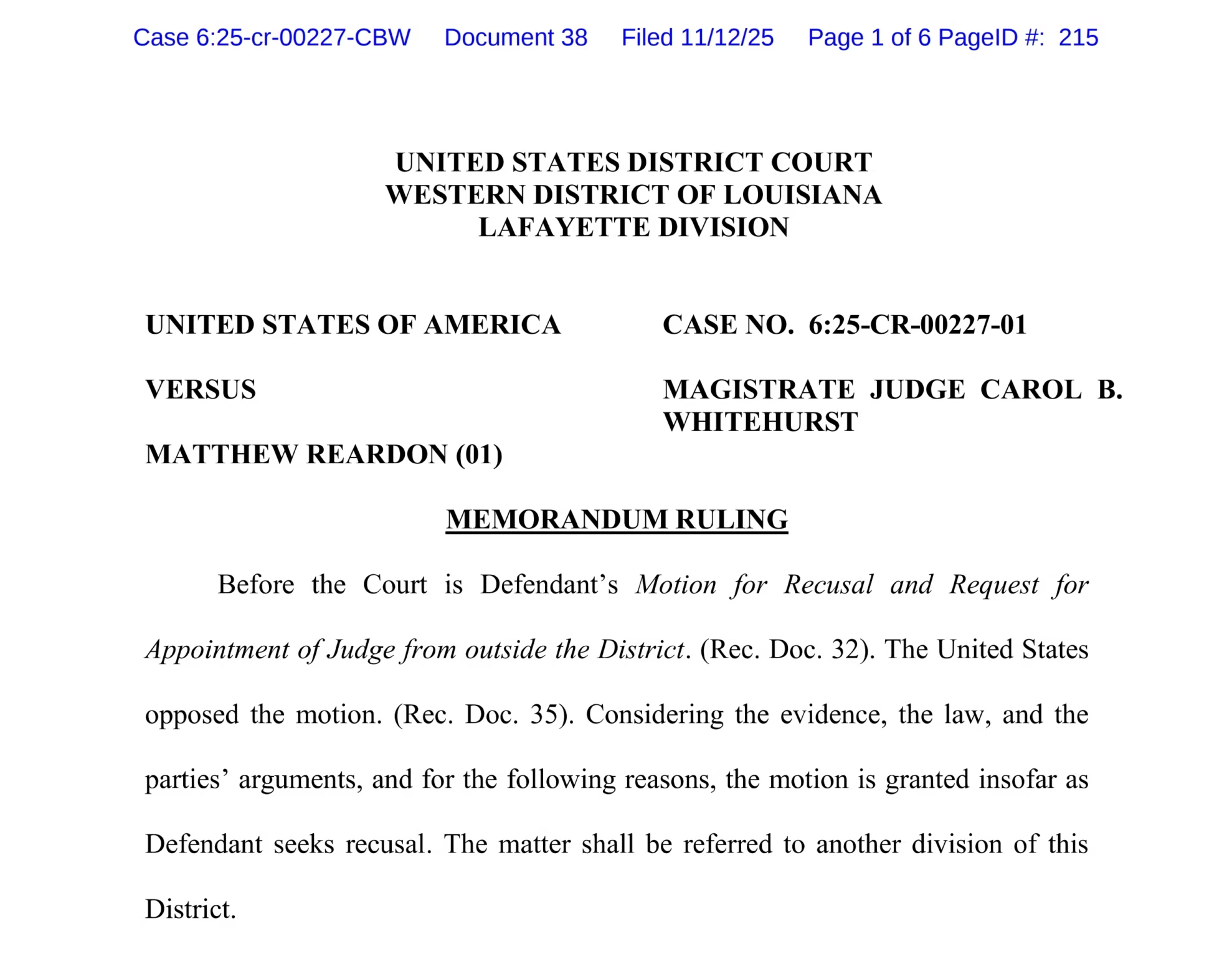
Magistrate Judge Carol Whitehurst issues an ex parte protective order without hearing the defense, gagging journalist Matthew Reardon. Is this judicial bias?

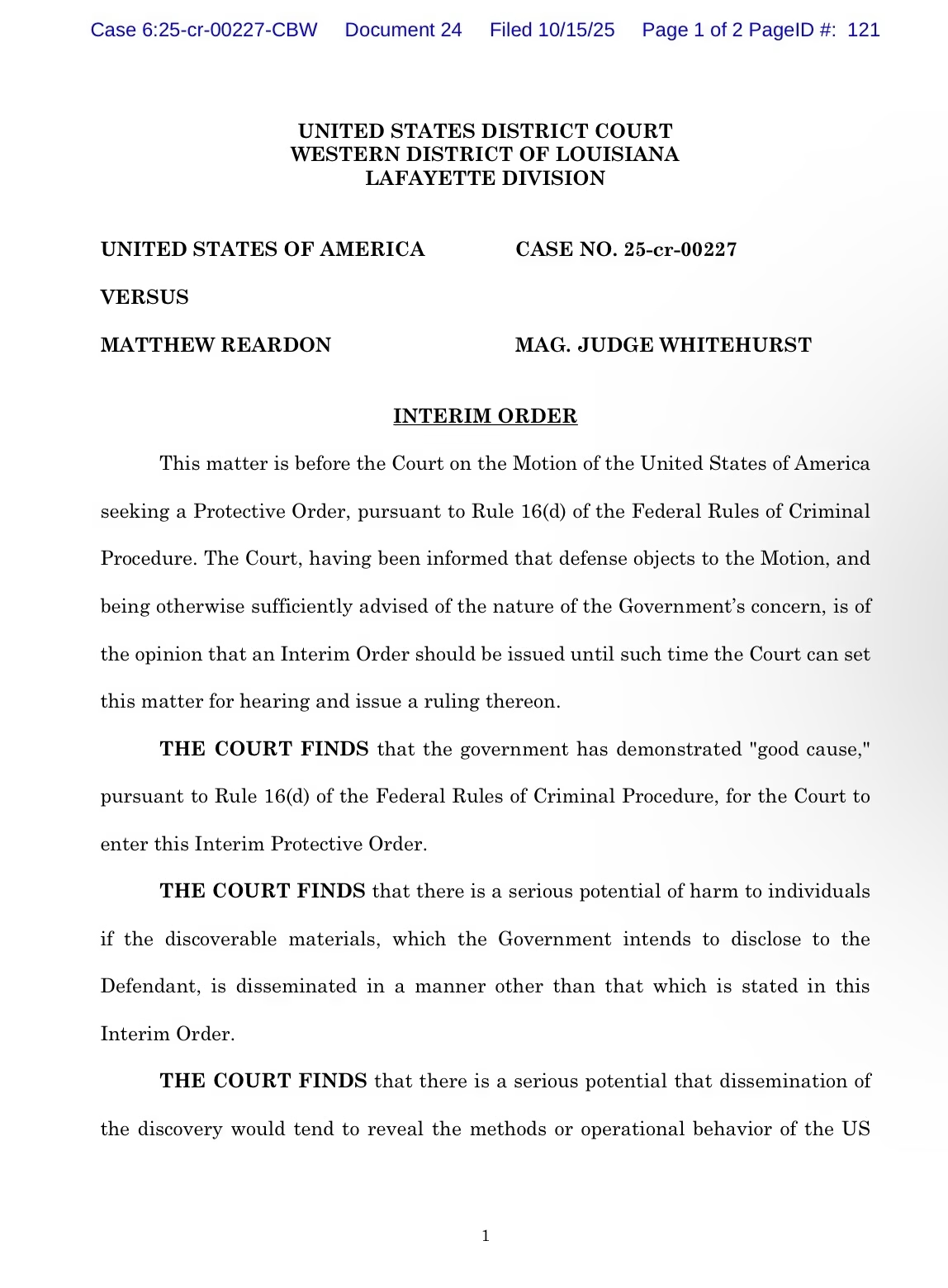
In a stunning development that raises serious questions about judicial bias, Magistrate Judge Carol B. Whitehurst has issued an ex parte interim protective order the same day the government filed their motion – without waiting for the defense response – effectively gagging journalist Matthew Reardon from exposing evidence of ex parte communications between U.S. Marshals and federal judges.
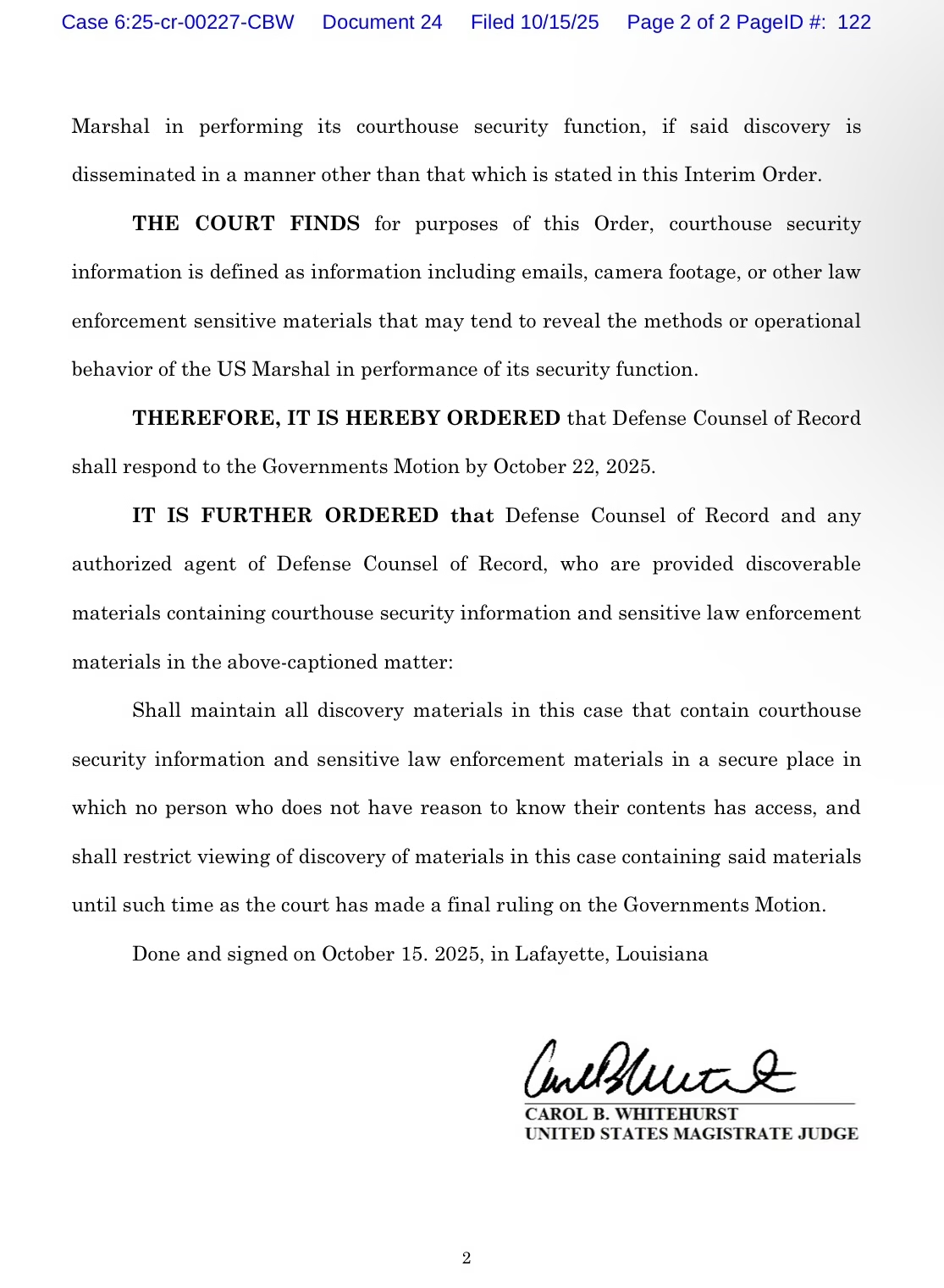
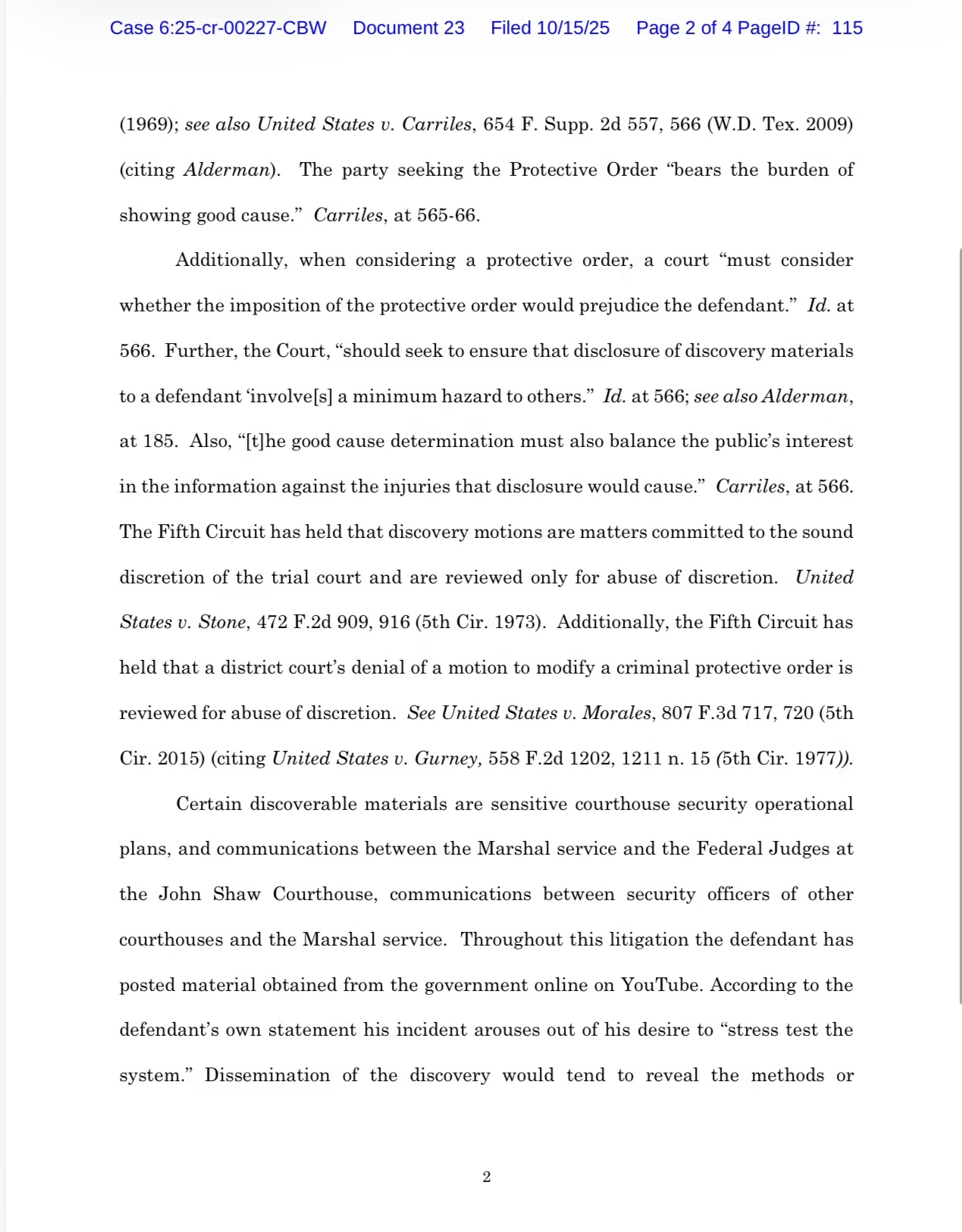
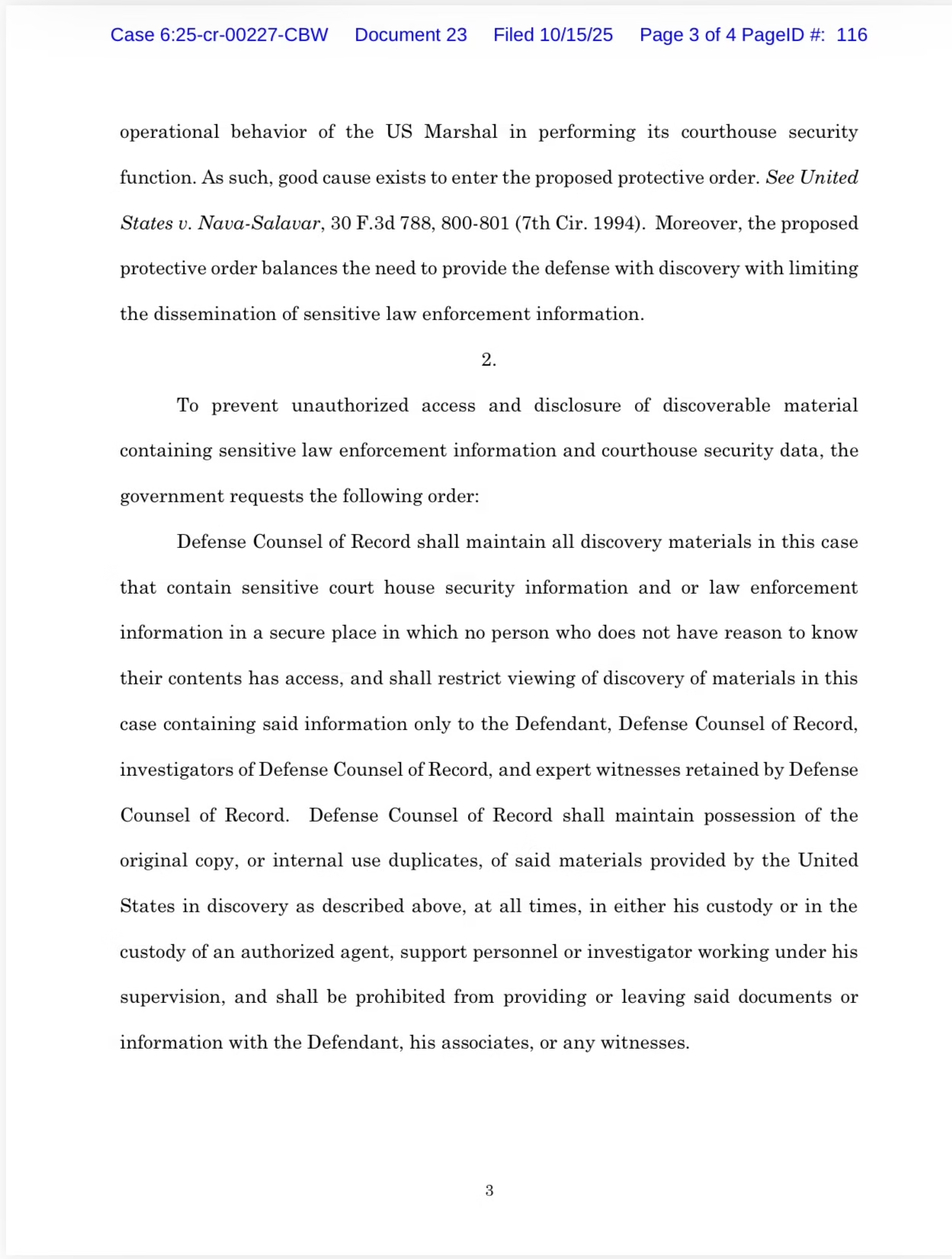
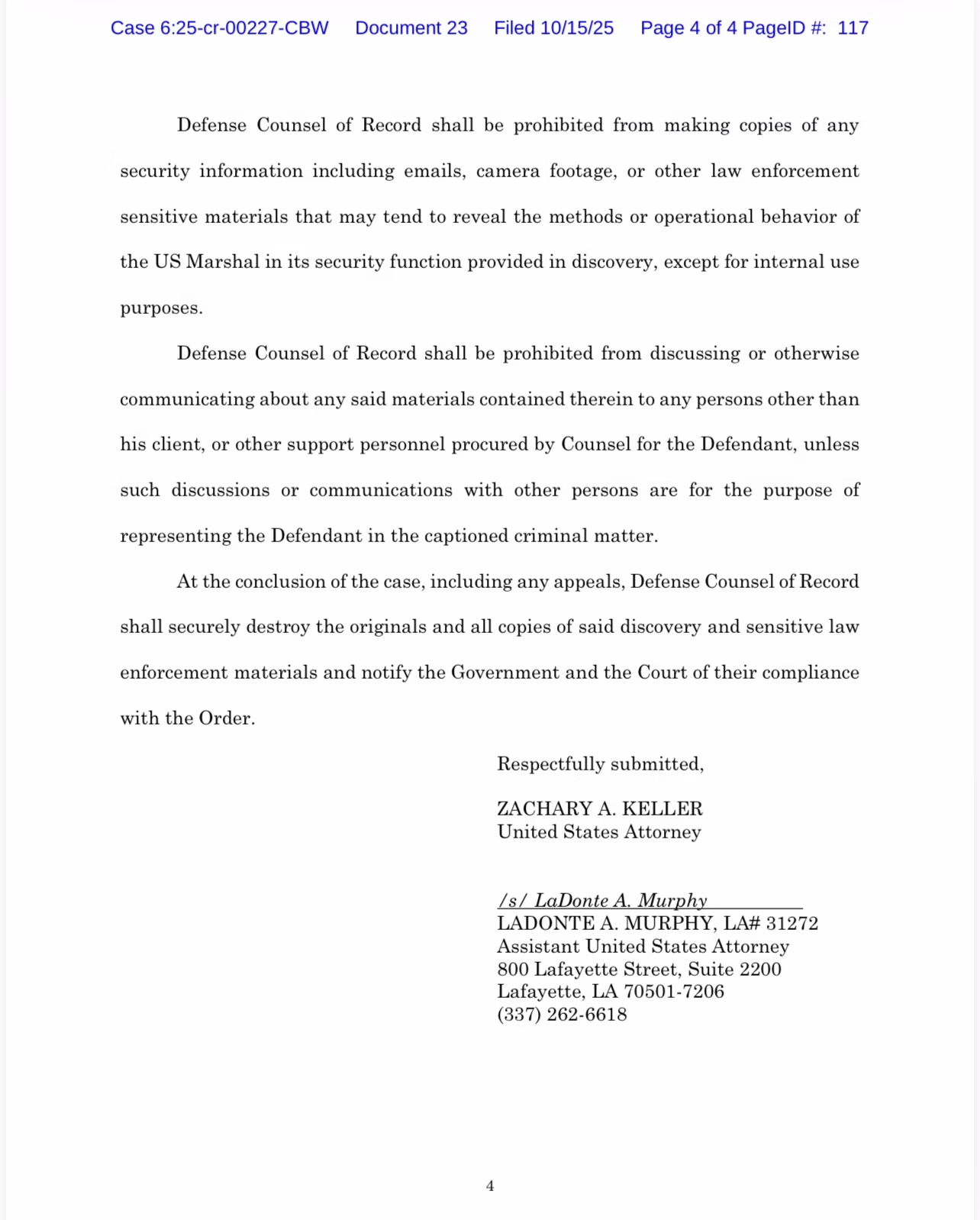
THE ORDER: Granted Ex Parte Without Hearing Defense
On October 15, 2025, Judge Whitehurst issued what she calls an “Interim Order” that:
- Restricts access to discovery materials containing “courthouse security information”
- Defines “security information” to include EMAILS – the very ex parte communications to judges
- Requires all materials be kept in a “secure place”with restricted viewing
- Acts immediately – before defense can file opposition (due October 22)
WHAT “EX PARTE ORDER” MEANS
An “ex parte order” means the judge granted relief to one party (the government) without hearing from the other party (the defense) first.
What happened:
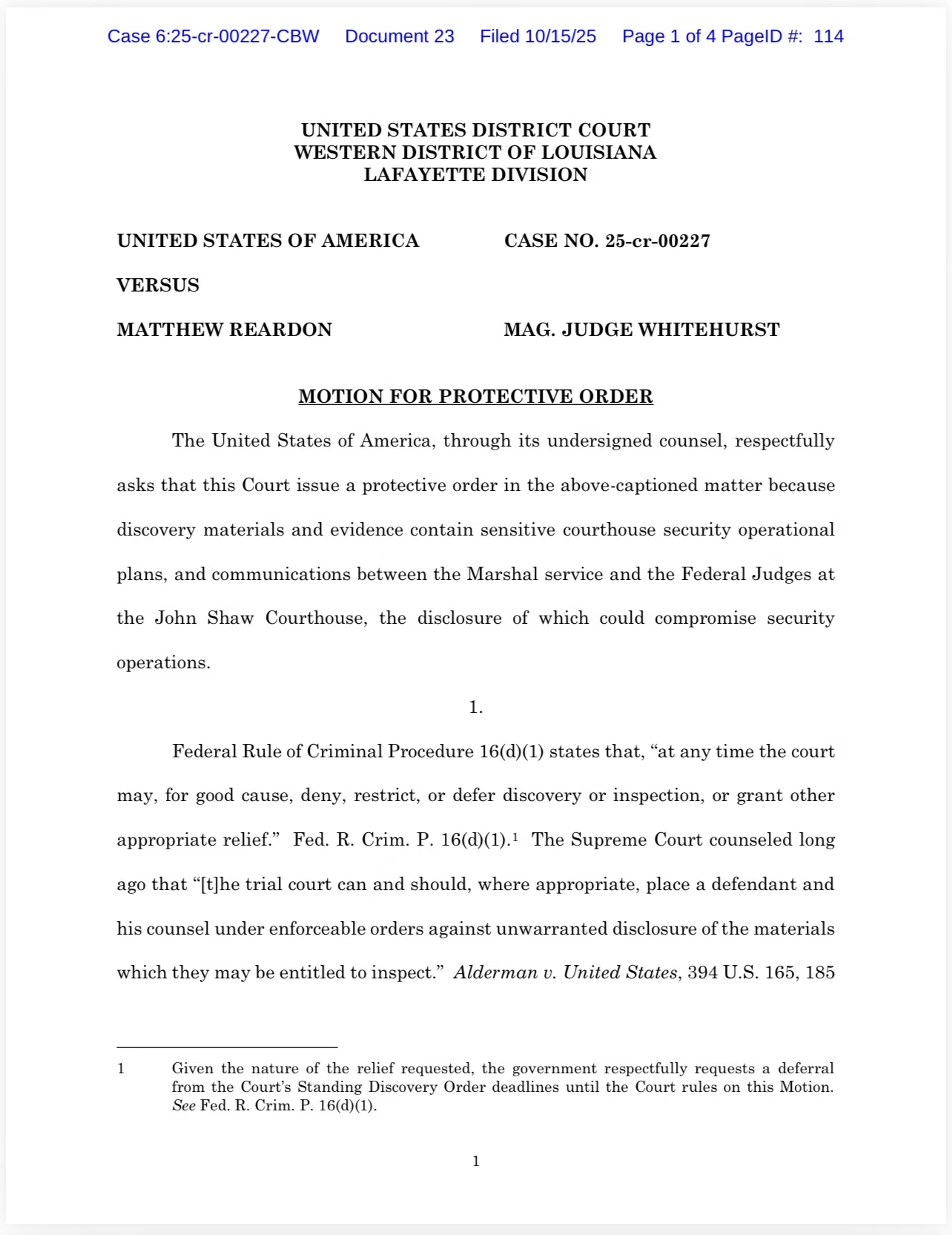
- Morning: Government files motion for protective order
- Afternoon: Judge grants it as “interim order”
- Problem: Defense response not due until October 22 (7 days away)
Judge Whitehurst acted on the government’s motion without waiting for the defense to respond. This denied Reardon:
- The opportunity to be heard
- Due process
- The ability to argue against the restrictions
This is highly unusual and suggests urgency to hide something.
THE SMOKING GUN: What She’s Trying to Hide
The order specifically defines “courthouse security information” as:
“information including emails, camera footage, or other law enforcement sensitive materials that may tend to reveal the methods or operational behavior of the US Marshal”
Translation: The emails between U.S. Marshals and federal judges – the ex parte communications that violate judicial ethics rules – are now classified as “security information.”
WHY THIS IS OUTRAGEOUS
1. The Emails Are NOT Security Information
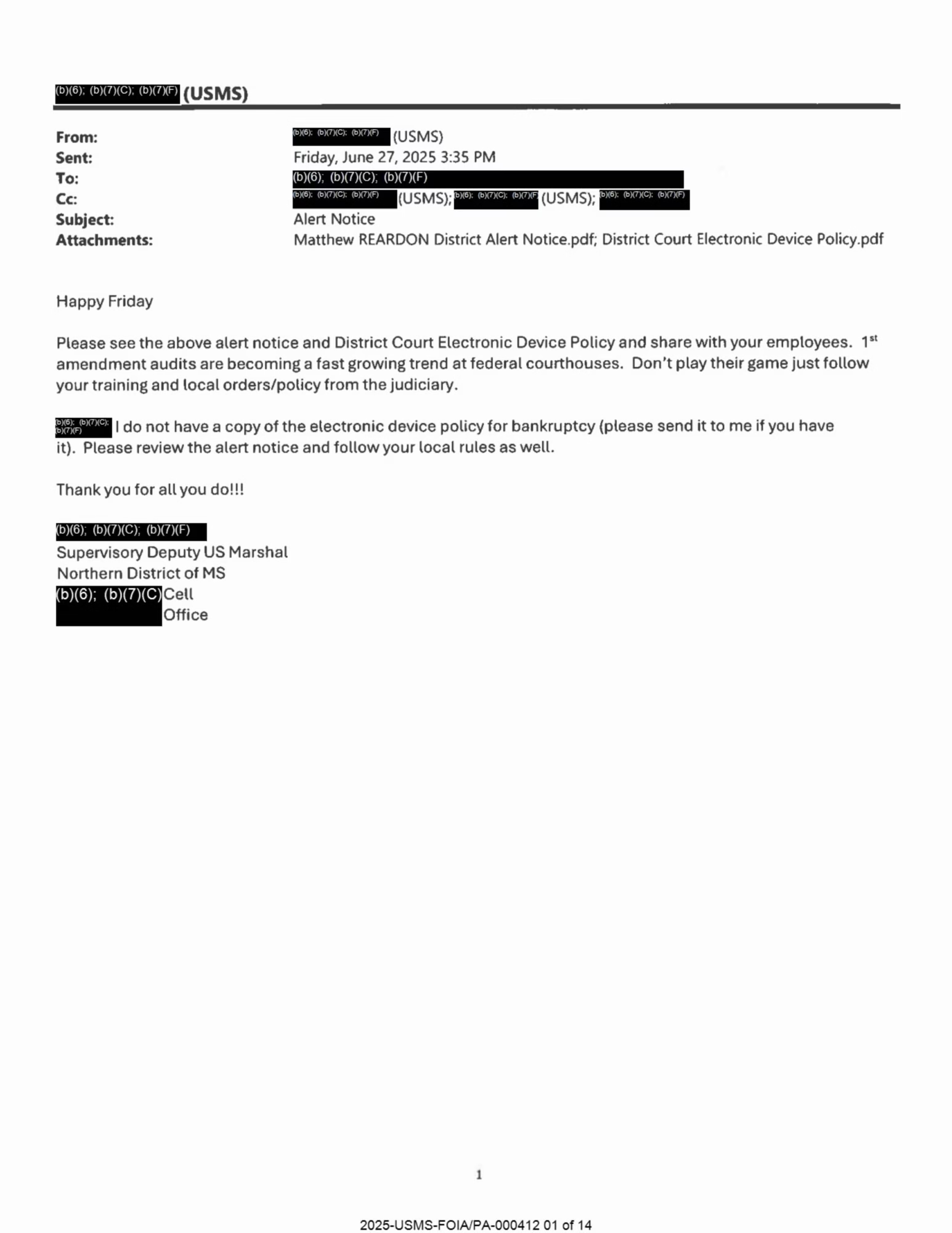
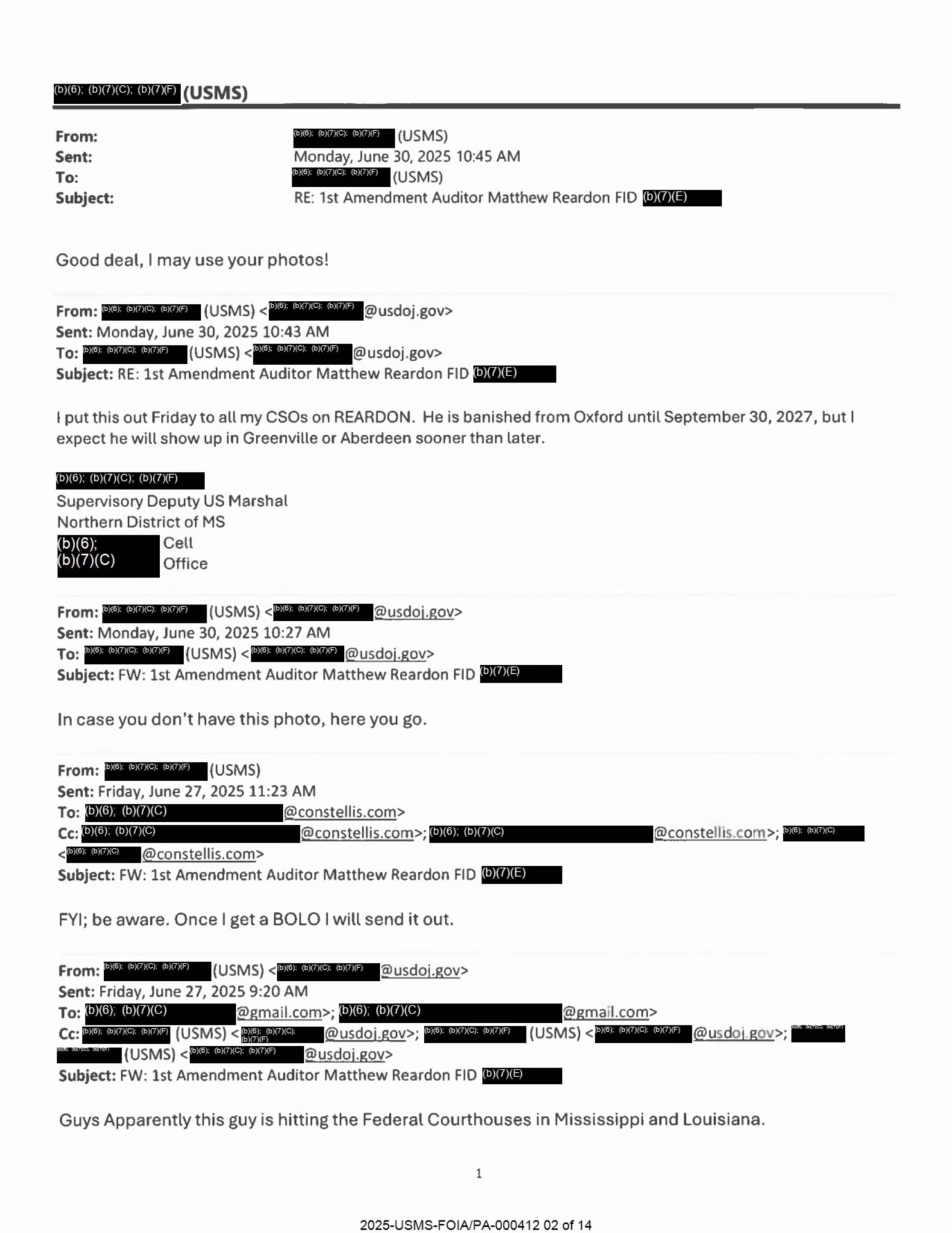
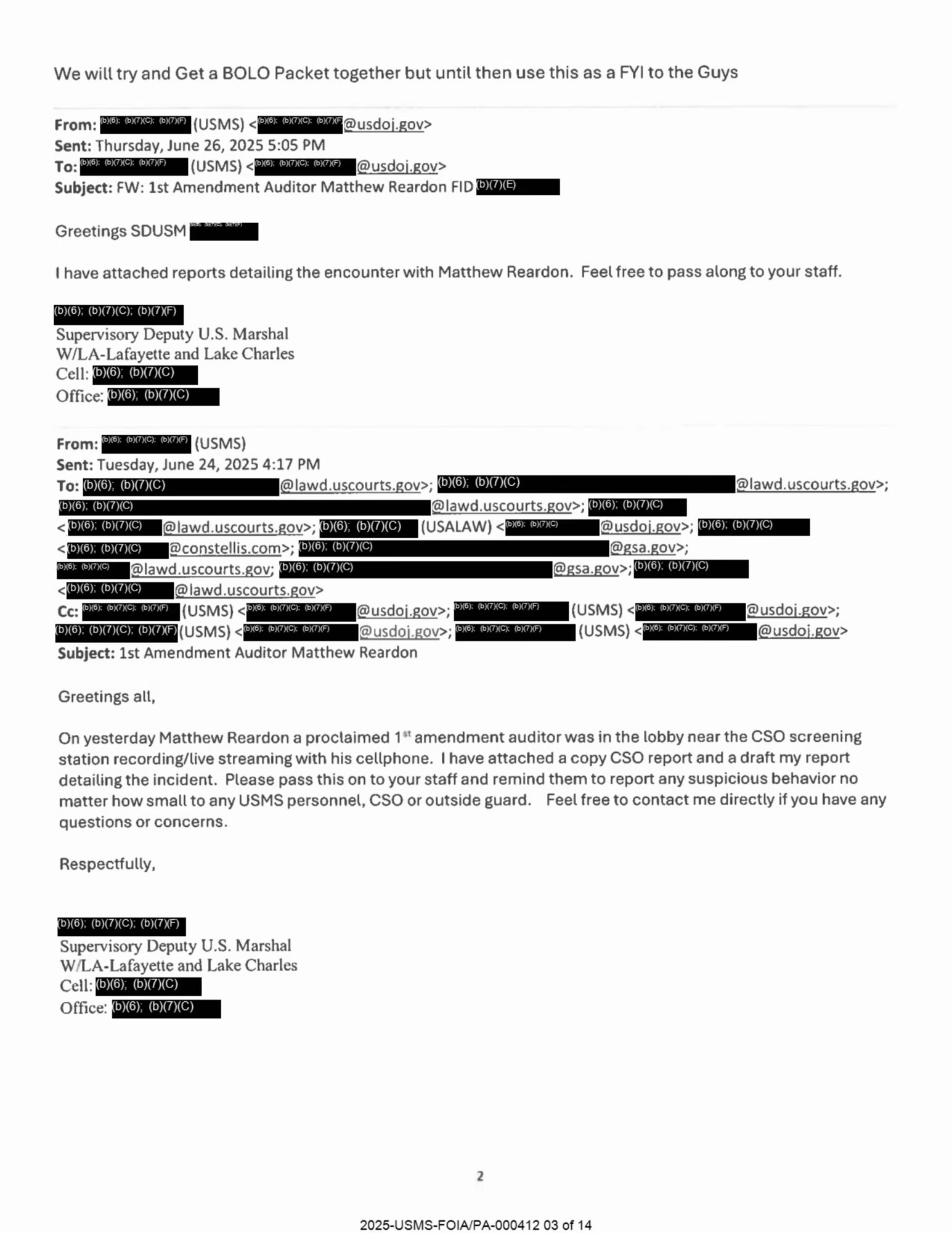
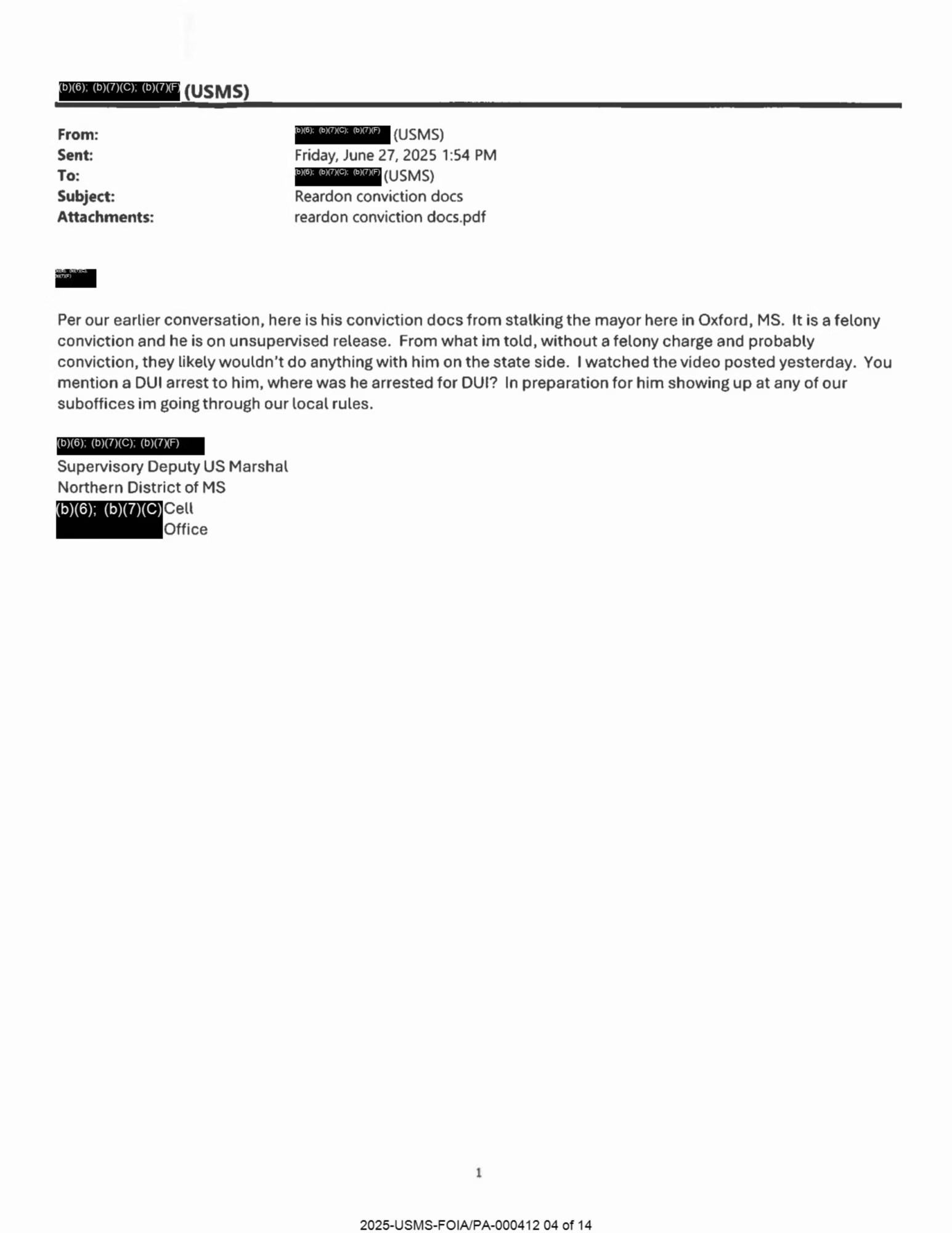
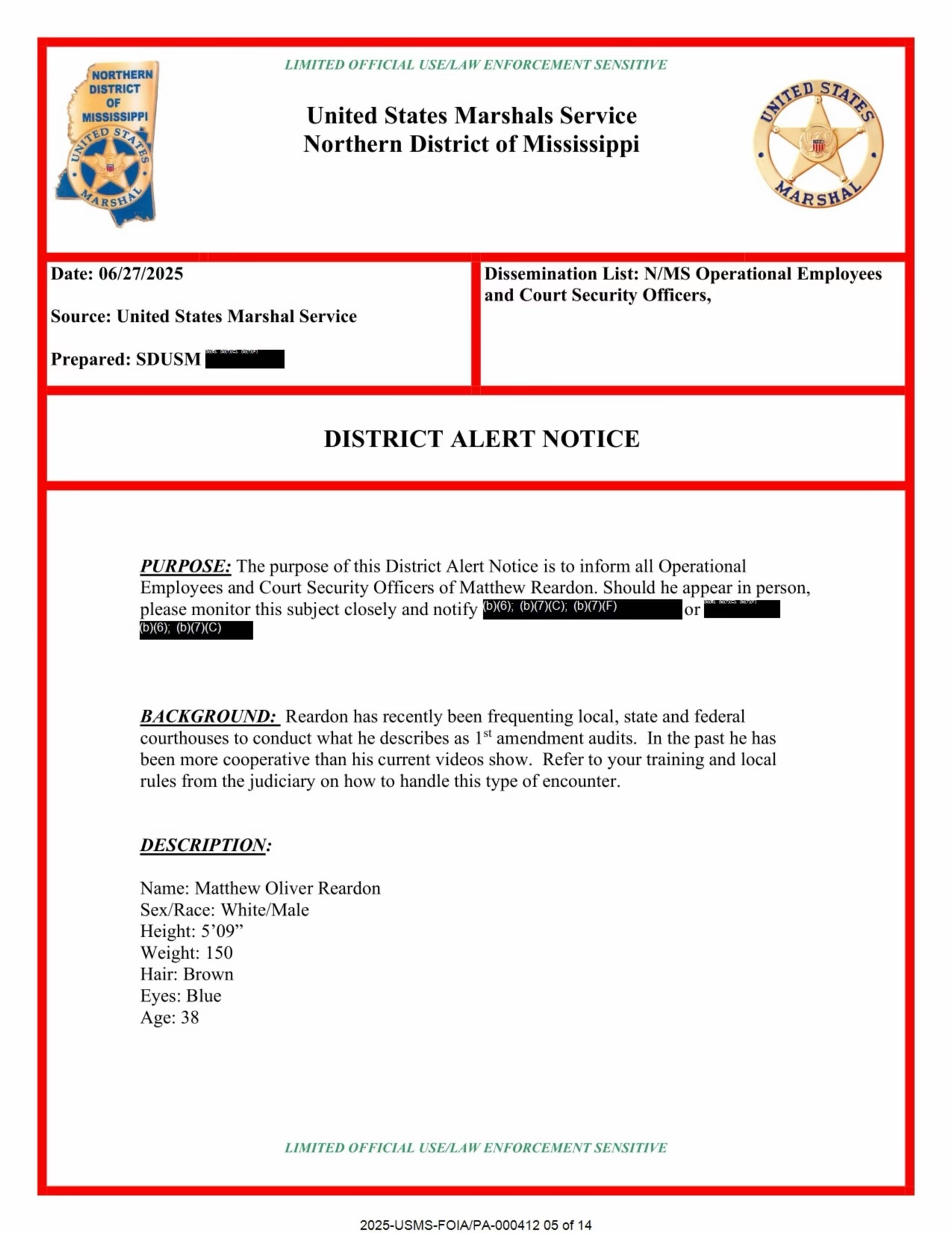
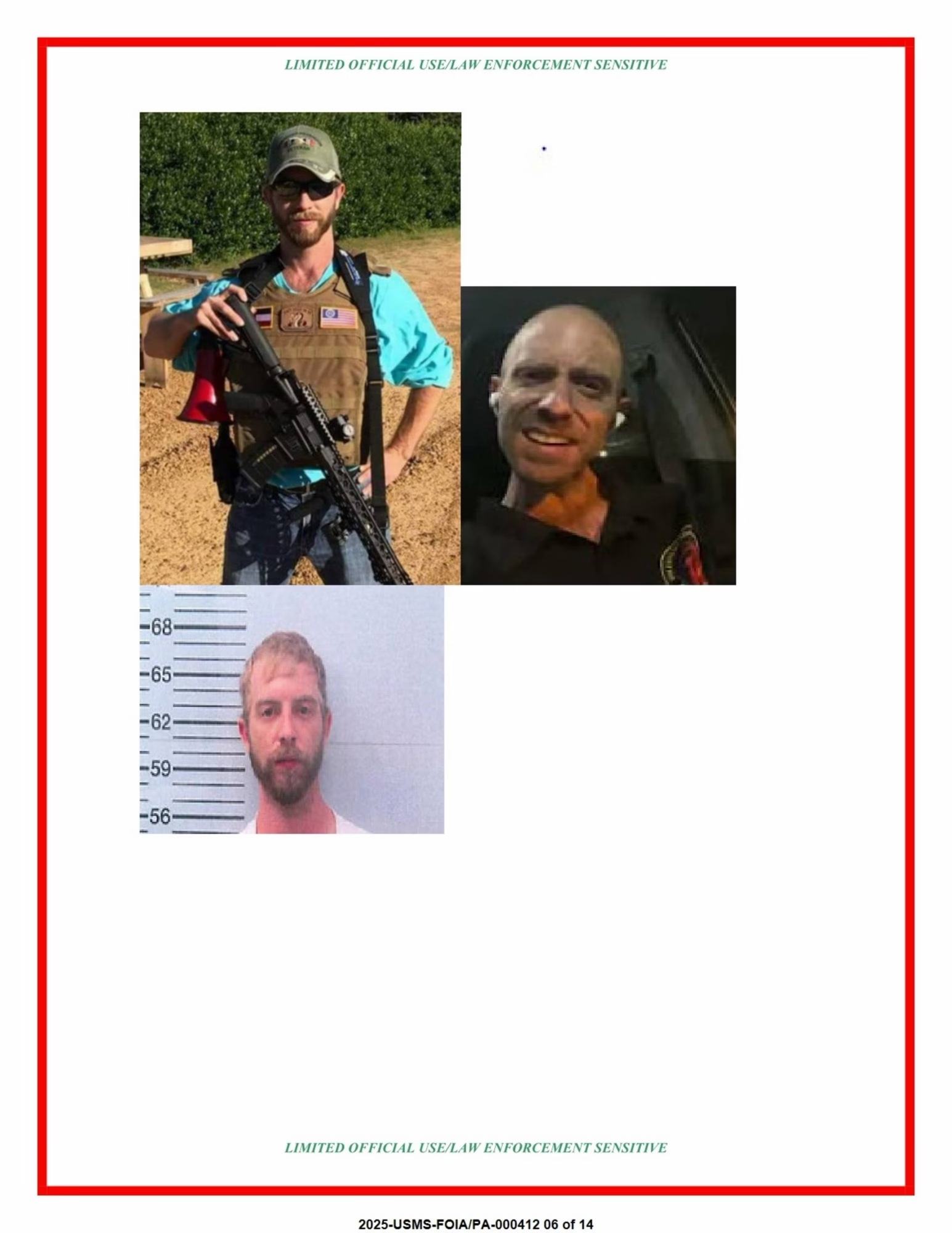
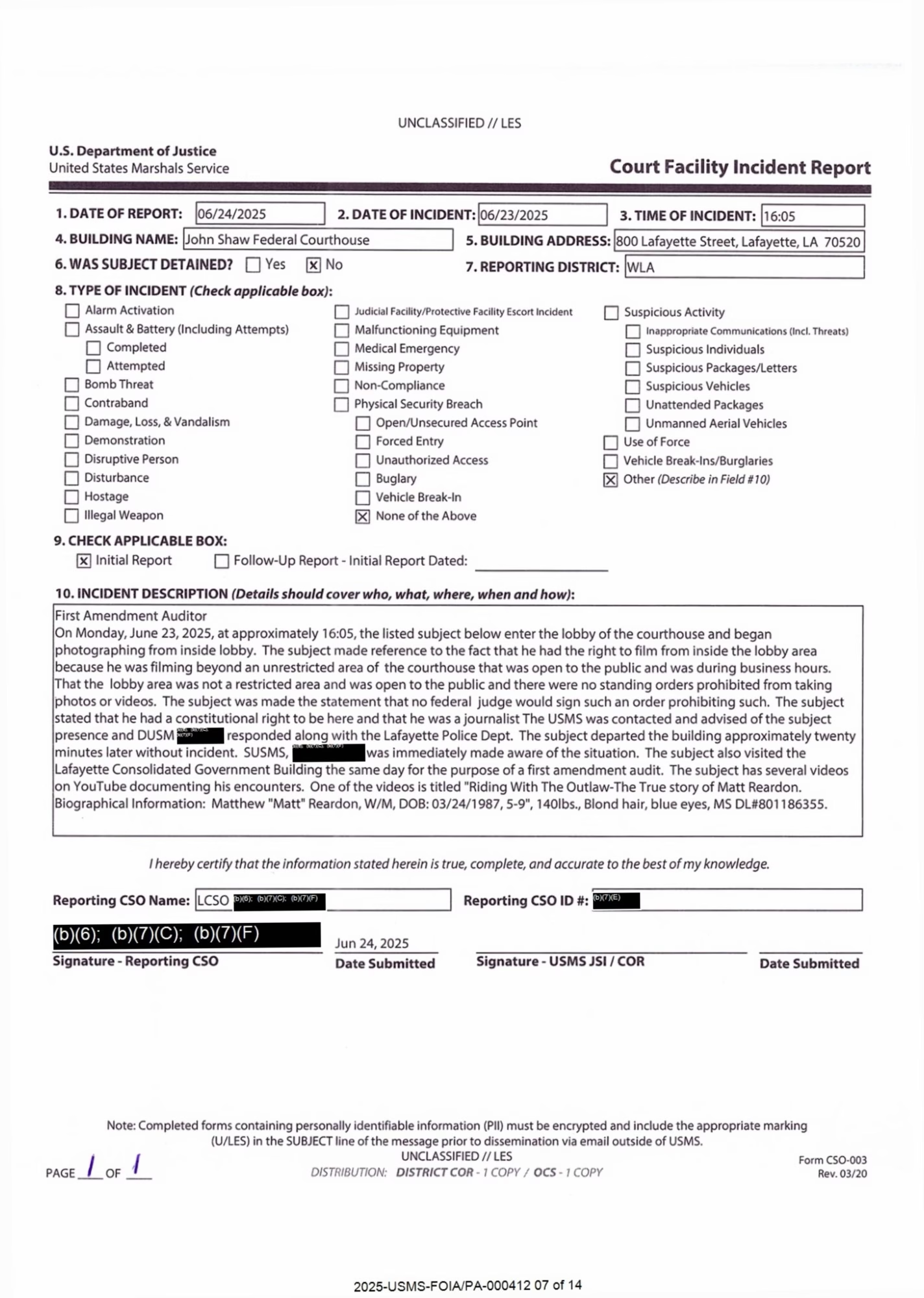
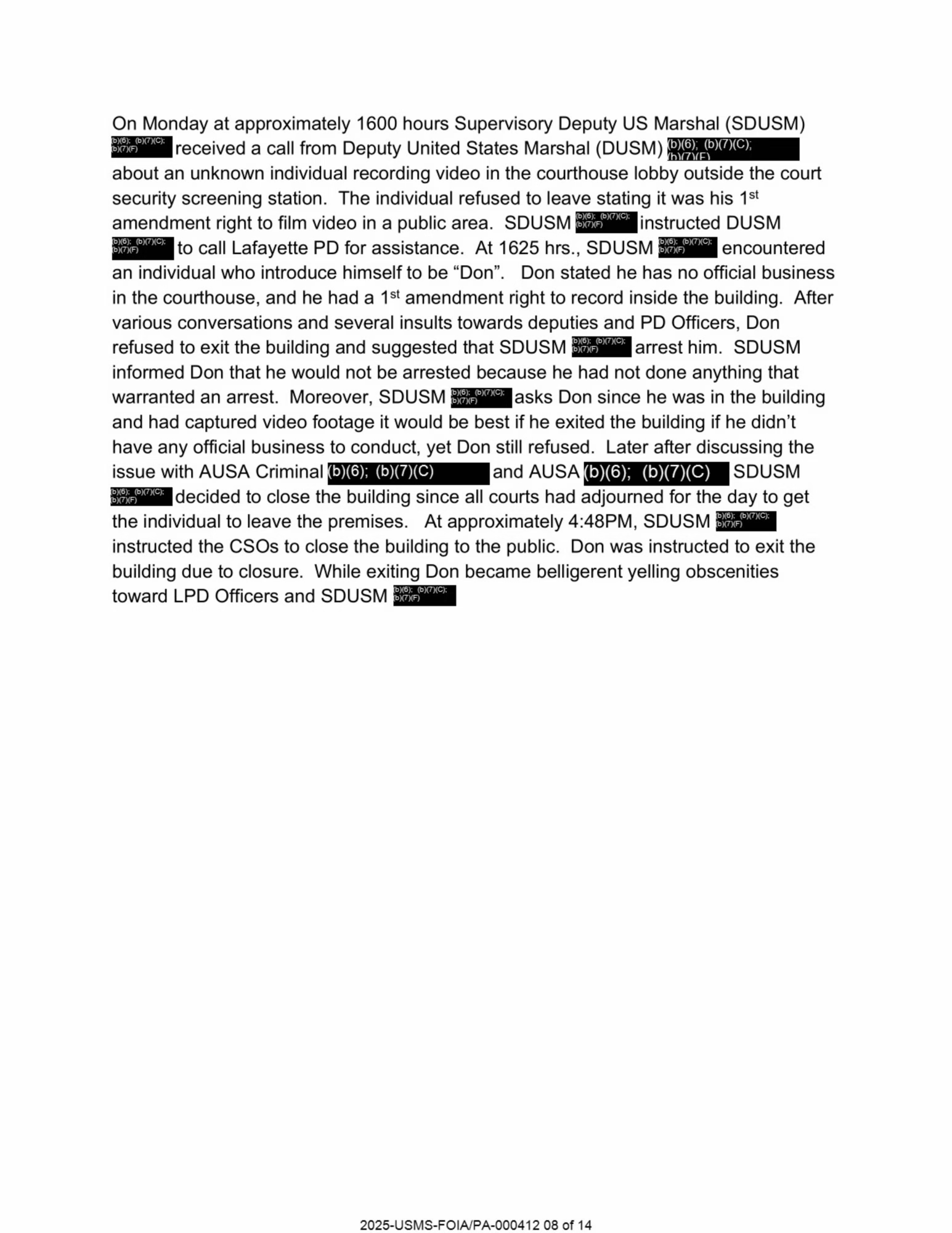
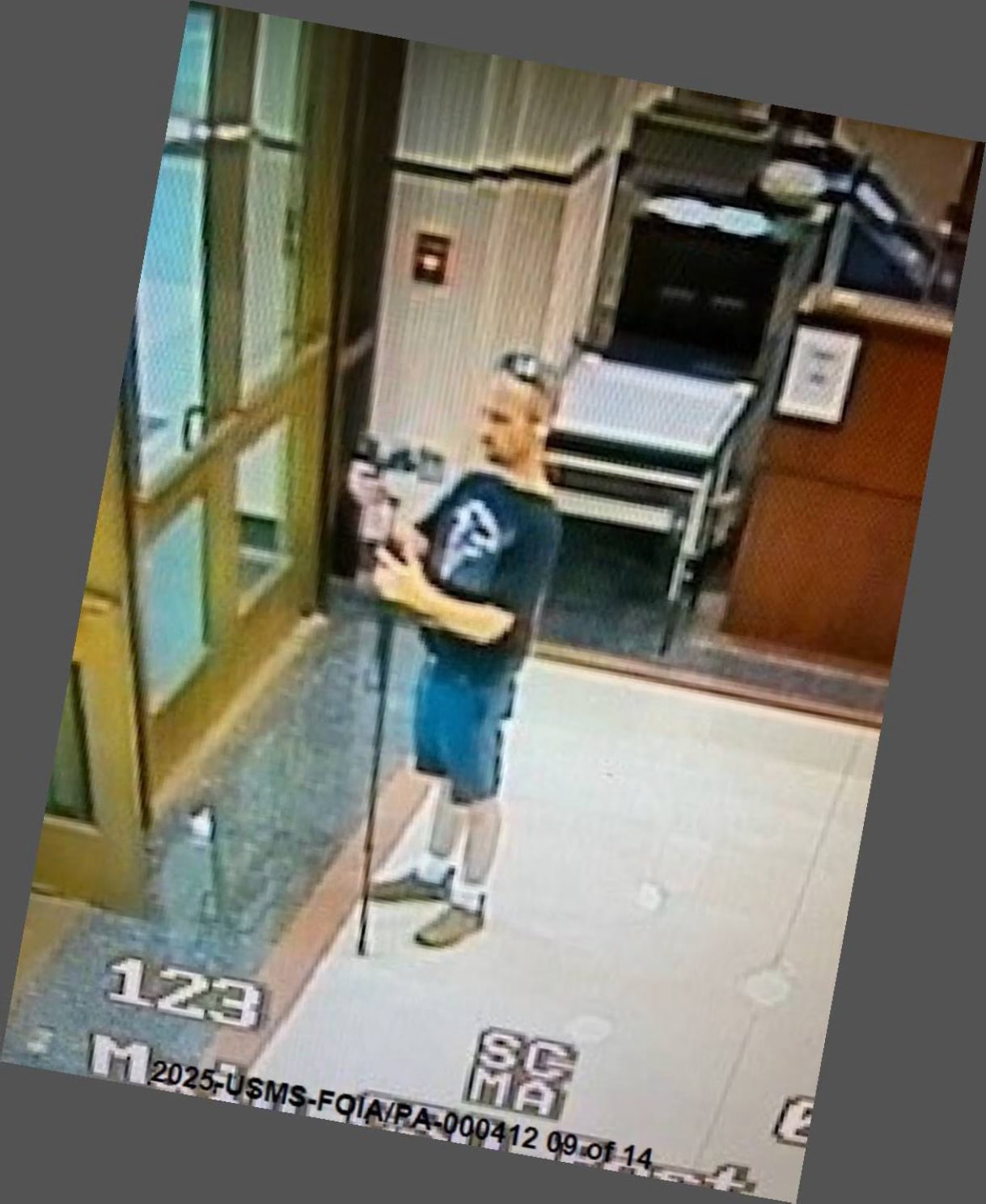
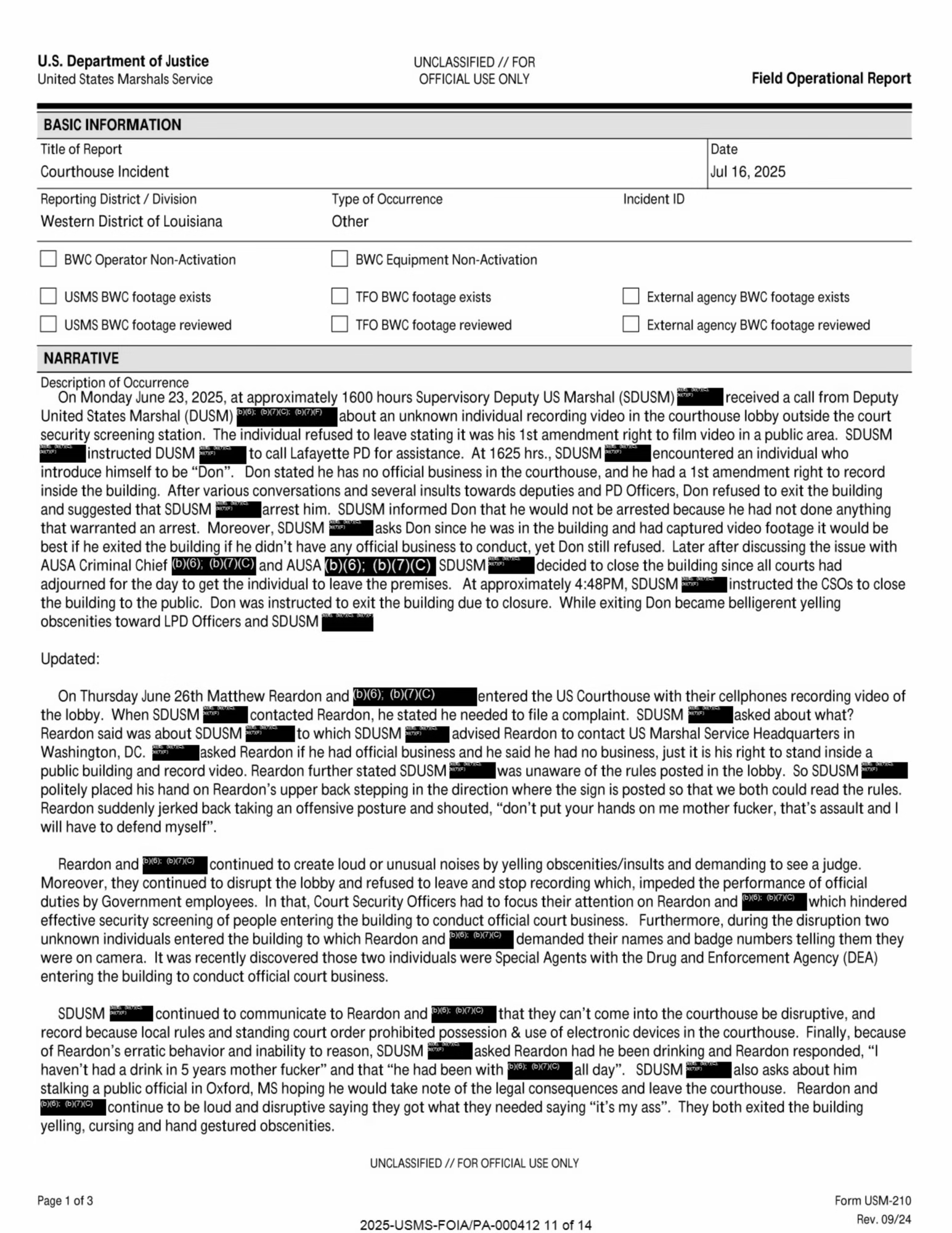
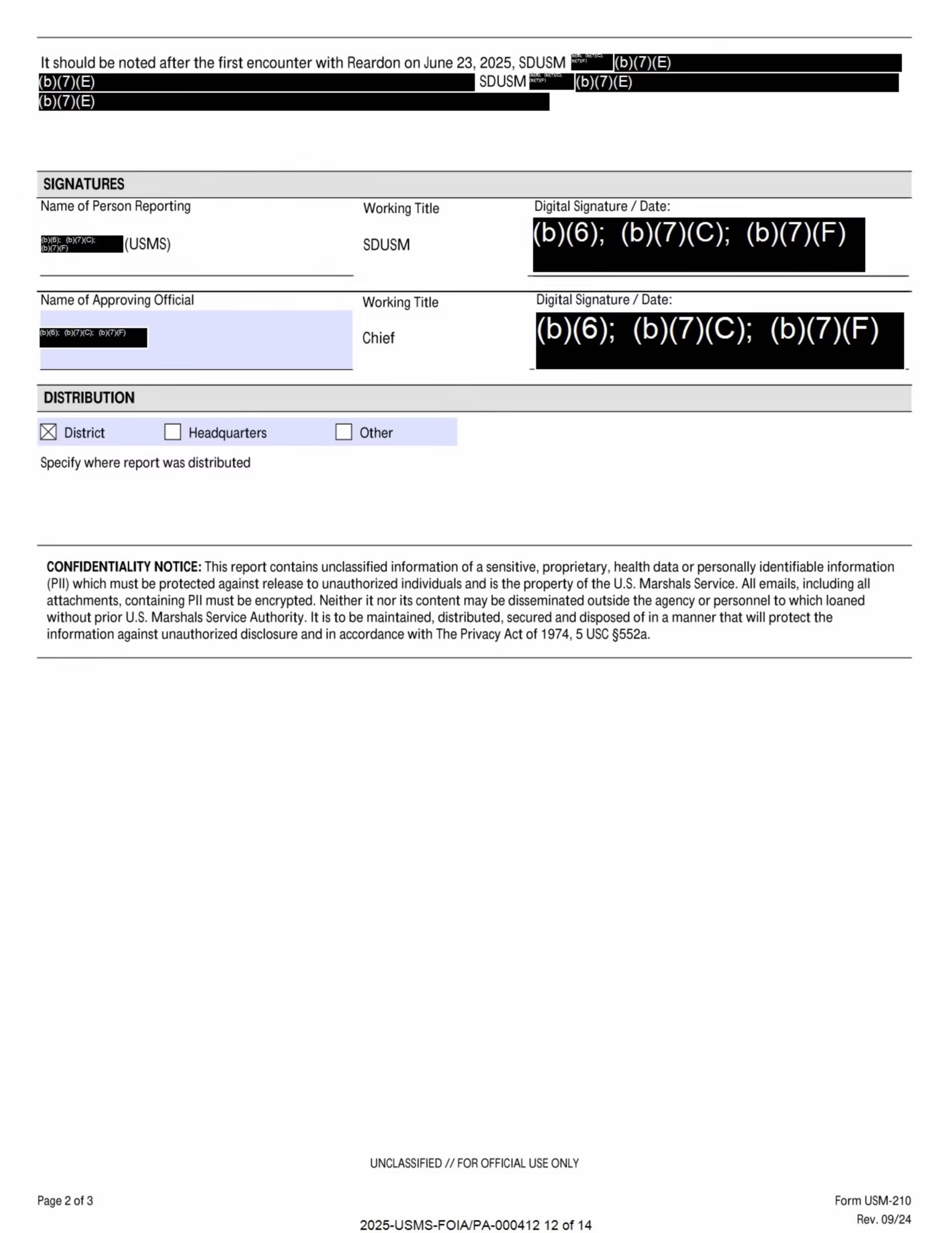
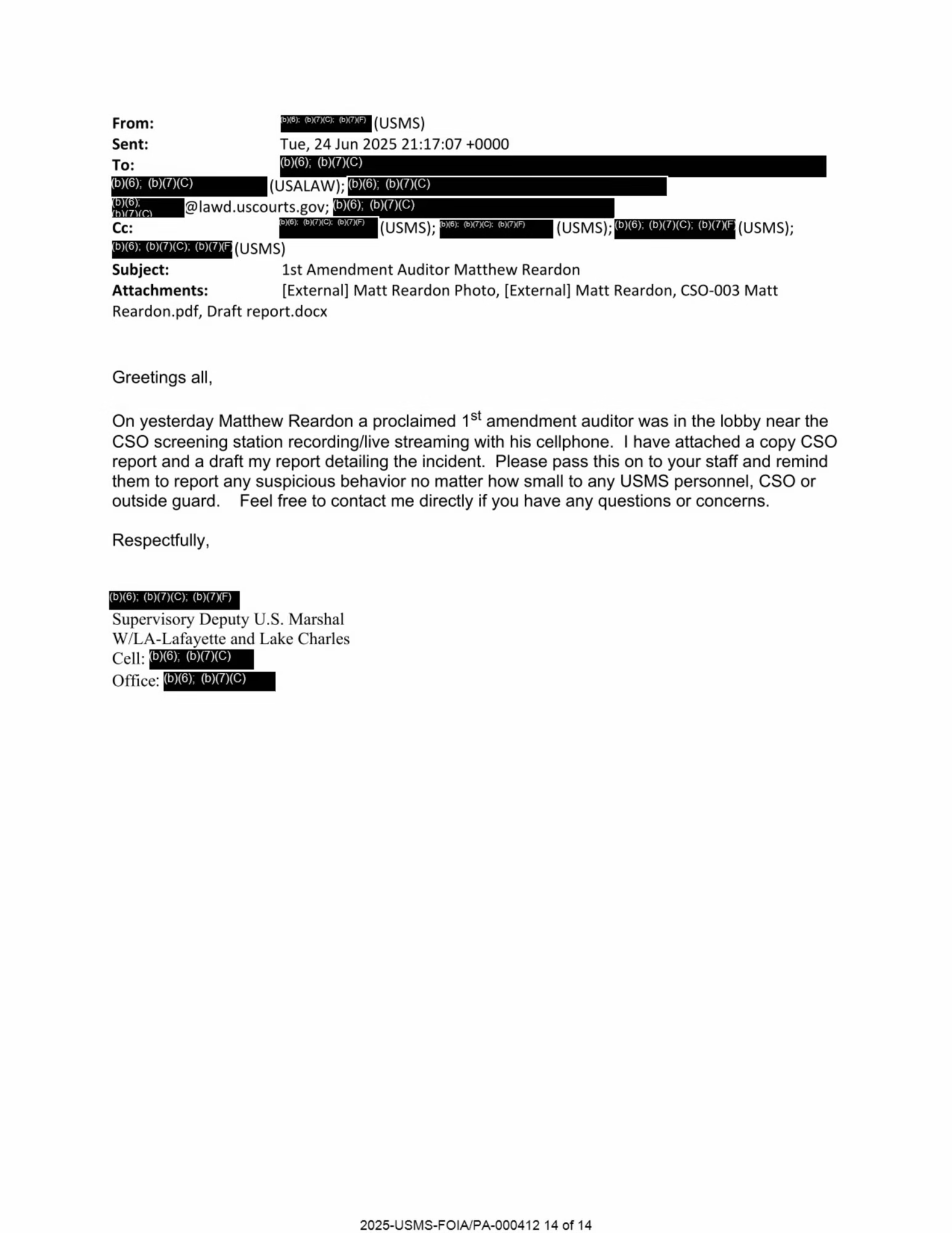
The ex parte communications revealed by FOIA records:
- Were sent to judges and chambers staff (@lawd.uscourts.gov addresses)
- Characterized Reardon’s journalism as “suspicious behavior”
- Created prejudice against Reardon before charges were filed
- Violated the Code of Conduct for United States Judges
These are evidence of judicial ethics violations, not security protocols.
2. She Granted Government’s Motion Without Hearing Defense
The order acknowledges that “defense objects to the Motion” and sets the response deadline as October 22, 2025.
But she granted the government’s motion on October 15, 2025 – the same day they filed it – a full week before the defense response is due.
No emergency justified this. Courts can issue ex parte orders only when:
- There’s a genuine emergency
- Delay would cause irreparable harm
- Notice would defeat the purpose
None of these factors exist here:
- Reardon has had discovery for weeks without incident
- No security breach has occurred
- Government identified no specific threat
- Waiting 7 days would cause no harm
This denies Reardon:
- The opportunity to be heard
- Due process
- The ability to argue against the restrictions
3. She May Have Received the Ex Parte Communications Herself
Here’s the critical question: Did Magistrate Judge Whitehurst receive any of the ex parte communications about Reardon?
FOIA records prove U.S. Marshals sent emails to multiple @lawd.uscourts.gov addresses on June 24 and 26, 2025.
Judge Whitehurst uses an @lawd.uscourts.gov email address.
If she received those communications, she is biased and must recuse.
Her immediate action to grant the government’s protective order—without hearing from the defense—suggests she may have something to hide. Why the rush to protect these communications from disclosure?
THE CATCH-22: Protecting Judicial Bias
The Interim Order creates an impossible situation:
- Reardon suspects judges received ex parte communications (confirmed by FOIA)
- Discovery materials would reveal which judges received them
- But the order prevents Reardon from viewing those materials
- Without viewing them, he cannot seek recusal of biased judges
- Without recusal, he faces trial before potentially biased judges
This is a textbook due process violation.
WHAT THE ORDER ACTUALLY DOES
Despite claiming to be about “security,” the order:
- Prevents exposure of judicial ethics violations
- Protects biased judges from being identified
- Denies Reardon the right to challenge bias
- Allows the government to hide its misconduct
- Ensures the cover-up continues
THE GOVERNMENT’S PRETEXTUAL “FINDINGS”
Judge Whitehurst found:
- Government demonstrated “good cause”
- “Serious potential of harm to individuals” if materials are disseminated
- “Serious potential” that dissemination would reveal “methods or operational behavior”
But these findings are based solely on the government’s one-sided motion – without hearing from the defense.
WHY “SECURITY” IS A LIE
The government’s security concerns are contradicted by their own conduct:
- They disclosed the information through FOIA – if truly sensitive, they wouldn’t have released it
- They filmed the same events Reardon filmed – no security issue with recording
- They waited 20+ minutes before arresting Reardon – no urgent security threat
- The emails went to judges, not just security personnel – not about security operations
The real concern is accountability, not security.
REARDON’S RESPONSE: Emergency Motion to Vacate
Reardon is filing an emergency motion demanding:
- Immediate vacation of the Ex Parte Interim Order
- Disclosure of whether Judge Whitehurst received ex parte communications
- Recusal of Judge Whitehurst if she received them
- Full disclosure of all judges who received communications
- Denial of the protective order motion
- Full access to all discovery materials
- Full briefing before any protective order issues – including defense response and hearing
THE BROADER IMPLICATIONS
This case now involves:
Layer 1: The Original Charges
- Arrest for peaceful protest on courthouse steps
- First Amendment violations
Layer 2: The Ex Parte Communications
- U.S. Marshals emailed judges before filing charges
- Judicial ethics violations
- Due process violations
Layer 3: The Cover-Up
- Government seeks protective order to hide communications
- Prior restraint on publication
Layer 4: The Ex Parte Order
- Judge grants government’s motion same day without hearing defense
- Premature restriction of access
- No emergency justification
- Possible judicial bias
Each layer makes the scandal worse.
QUESTIONS THAT MUST BE ANSWERED
- Did Magistrate Judge Whitehurst receive any ex parte communications about Reardon?
- If so, why didn’t she disclose this and recuse?
- Why did she grant the government’s motion the same day without waiting for the defense response?
- What emergency justified issuing an ex parte order without hearing from the defense?
- Why is she classifying emails to judges as “security information”?
- Is she protecting her own bias or the bias of other judges
THE STAKES
If this interim order stands:
- Judges can be secretly prejudiced against defendants
- Defendants can never learn about the bias
- Evidence of judicial ethics violations can be hidden
- The government can coordinate with judges behind closed doors
- No one gets a fair trial
This is not about one journalist. This is about whether our justice system works.
TIMELINE OF ESCALATING COVER-UP
June 24, 2025: U.S. Marshals email judges about Reardon
June 26, 2025: Follow-up email encouraging distribution
August 25, 2025: Reardon arrested
October 15, 2025 (morning): Government files motion for protective order
October 15, 2025 (afternoon): Judge Whitehurst grants government’s motion as ex parte interim order (same day, without waiting for defense response)
October 22, 2025: Defense response due (but order already in effect)
The pattern: Act fast, hide evidence, prevent exposure.
REARDON’S STATEMENT
“This ex parte order proves exactly what I’ve been saying: they’re desperate to hide evidence of judicial bias. Judge Whitehurst granted the government’s motion the same day they filed it—without waiting for my opposition, without any emergency justification. That’s not how justice works.
There was no emergency. I’ve had these materials for weeks without incident. The only urgency here is their desire to hide evidence of judicial bias before I can expose it.
If she received those ex parte communications herself, she’s protecting her own bias. If she didn’t, she’s protecting other judges’ bias. Either way, this is a cover-up—and the court is helping them do it.
I will not be silenced. I will not accept a system where judges can be secretly prejudiced against defendants, and courts help the government hide it. And I will not stop fighting for transparency.
The government created this scandal by violating judicial ethics rules. They cannot now hide behind ‘security’ to conceal their misconduct.
Sunlight is a disinfectant. They’re trying to turn off the lights.”
HOW YOU CAN HELP
- Share this story – The mainstream media won’t cover judicial corruption
- Contact the Fifth Circuit Judicial Council – File complaints about judicial ethics violations
- Demand transparency – Call your representatives and demand accountability
- Support independent journalism – We the People News needs your help to continue investigating
- Stay informed – This case is developing rapidly
- GoFundMe: https://gofund.me/d7e84db6
WHAT TO WATCH FOR
- Emergency motion to vacate (filing this week)
- Judge Whitehurst’s response to recusal demand
- Disclosure of which judges received communications
- District Judge’s review of interim order
- Possible appeal to Fifth Circuit
THE BOTTOM LINE
A federal magistrate judge has issued a gag order before the defense could respond, classifying evidence of judicial ethics violations as “security information,” and potentially protecting her own bias.
This is not justice. This is a cover-up.
And it’s happening in broad daylight.
BREAKING UPDATES:
We will update this story as developments occur. Follow We the People News for real-time coverage.
DOCUMENTS:
- [Interim Protective Order – October 15, 2025]
- [Government’s Motion for Protective Order]
- [FOIA Records Showing Ex Parte Communications]
- [Emergency Motion to Vacate (forthcoming)]
CONTACT:
- Email: [email protected]
- Website: WTPNews.org
- YouTube: We the People News
- Linktree: https://linktr.ee/wtpnews
SHARE THIS INVESTIGATION
🚨 BREAKING: Federal judge grants government’s protective order motion SAME DAY without hearing defense – hiding evidence of ex parte communications to judges. No emergency justified this. Cover-up in real time. #JudicialCorruption #ExParteScanal
[Share on Twitter] [Share on Facebook] [Share on Reddit]
© 2025 We the People News. All rights reserved.
This is investigative journalism documenting judicial proceedings. All facts are sourced from court documents and FOIA records.
Discover more from We The People News
Subscribe to get the latest posts sent to your email.
Medical Dispensary Denies Disabled Marine Corps Veteran During PTSD Crisis

Exclusive: FBI database allegedly accessed by Red Cross shelter after man sought shelter during winter storm
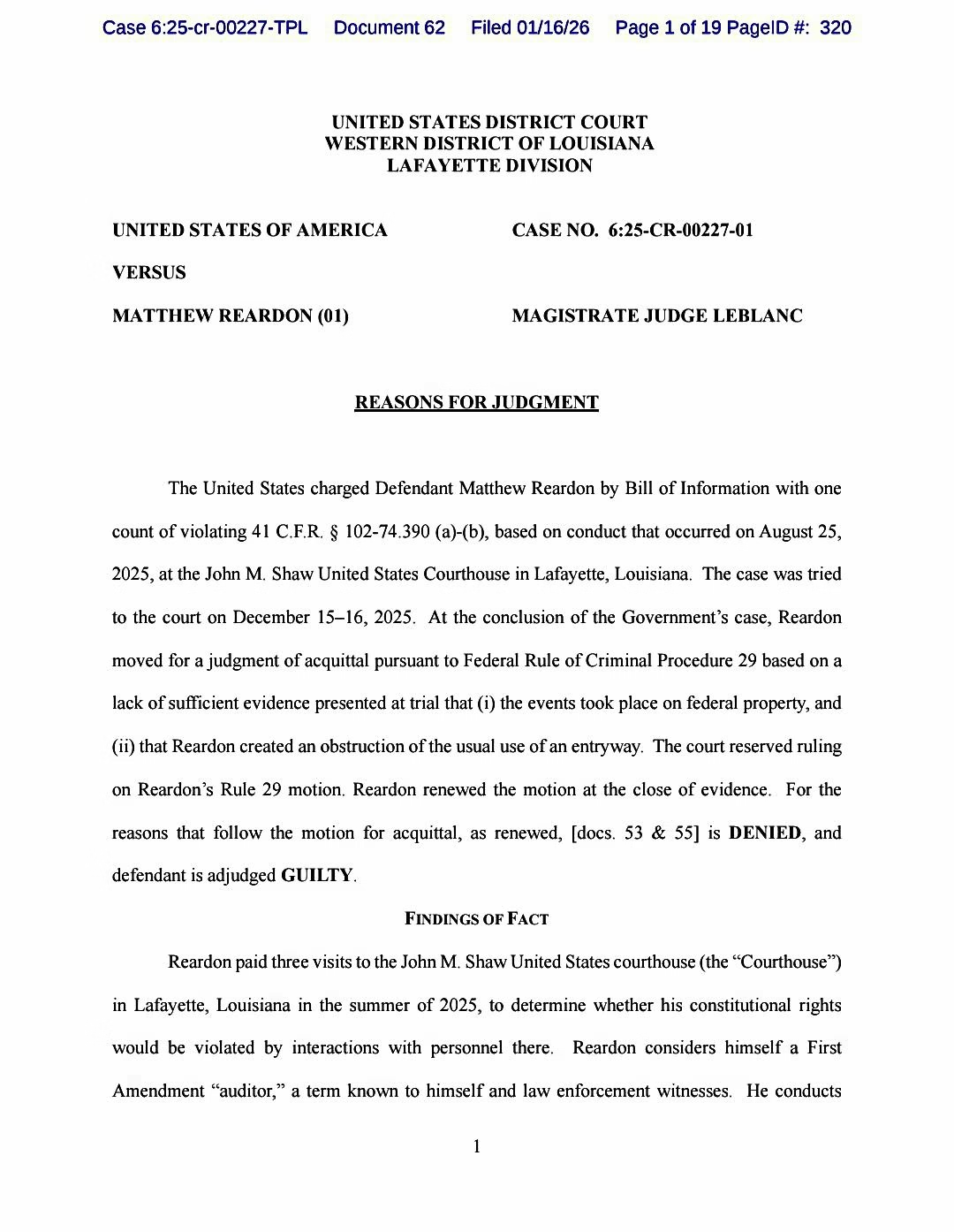
MAJOR VERDICT | How the Court Bent Law, Facts, and Time to Save the Government
Breaking News Alert! A Chilling Warning to All Citizens particularly Journalists & Reporters in North Mississippi
Staged DWI Arrest of Journalist Exposes Deep Government Corruption
New Song- False Witness
Journalist returns to Galveston, TX to boldly confront Police and Officials over major corruption scandal in 2023

Journalist Violently Arrested for Protected Speech – WTPNews

State Trooper Assaults Journalist Outside Mississippi Governor’s Mansion in Viral Standoff
-
Breaking News4 years ago
Breaking News Alert! A Chilling Warning to All Citizens particularly Journalists & Reporters in North Mississippi
-
Audits and Encounters1 year ago
Staged DWI Arrest of Journalist Exposes Deep Government Corruption
-
Lafayette County Racket1 year ago
New Song- False Witness
-
 Audits and Encounters3 years ago
Victory for Transparency! Batesville, MS Reverses Controversial Ordinance Banning Video Recording in City Buildings
-
Breaking News2 months ago
MAJOR VERDICT | How the Court Bent Law, Facts, and Time to Save the Government
-
 Breaking News1 year ago
Attack on the Press: Journalist Trapped, Railroaded, and Imprisoned in Mississippi