Fifty years ago, a Kentucky-born writer named Hunter S. Thompson walked into the Kentucky Derby with a notebook, a bottle, and no intention of staying objective. What he filed was not a horse-racing story. It was the birth of gonzo journalism — the reporter as participant, the story told from the inside of the chaos.
Today, We The People News releases “Gonzo: Then and Now,” a short documentary that sets Thompson’s revolution beside a modern one: First Amendment auditing — the practice of ordinary citizens filming public officials while they do the public’s business.
The film makes one argument, and once you see it, it’s hard to unsee: these are the same war, fought fifty years apart with different weapons.
Thompson wrote himself into the story
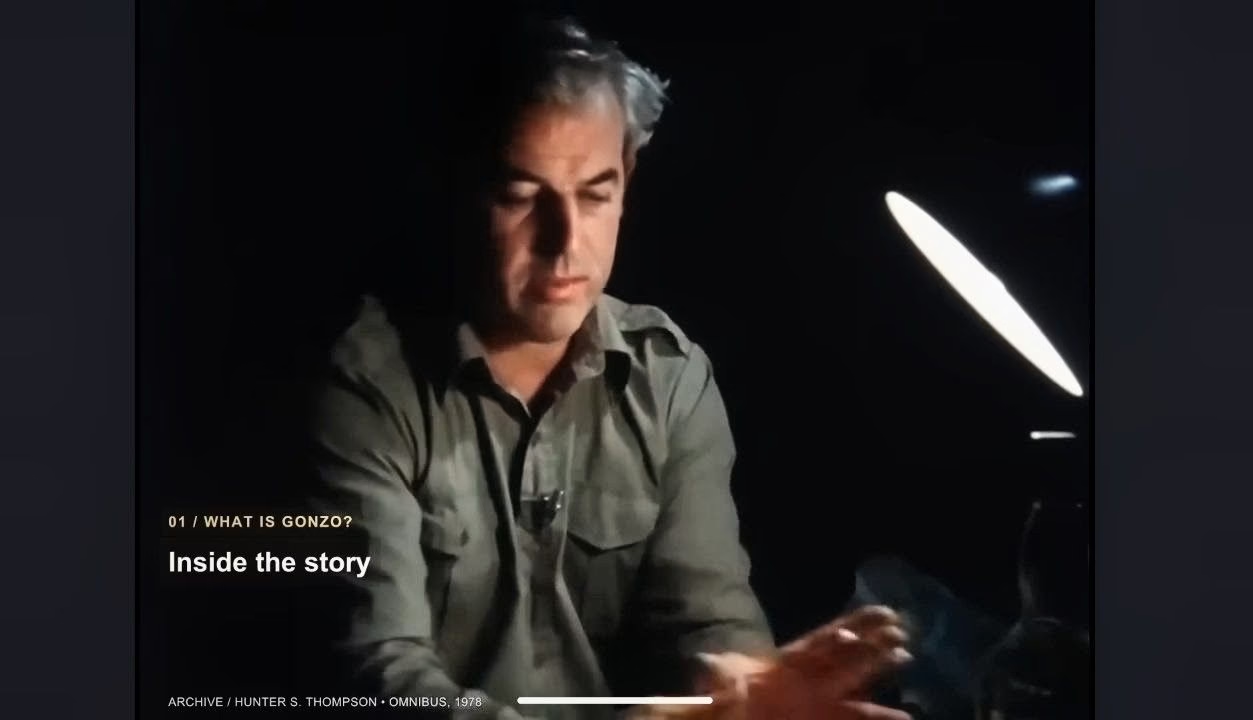
Gonzo wasn’t a gimmick. It was a method. In 1970, Thompson and illustrator Ralph Steadman were sent to cover the Derby. Instead of the race, they documented the drunken, decaying spectacle of the crowd — and Thompson’s own spiraling reaction to it. His editor, Bill Cardoso, read the piece and wrote back one word that named a genre: gonzo.
A year later came Fear and Loathing in Las Vegas — a road trip through the American Dream that was never really about the assignment. Then Fear and Loathing on the Campaign Trail ’72, where Thompson embedded himself in a presidential race and covered it from the inside, manic, profane, and without a shred of false neutrality.
His style was unmistakable: manic energy, profanity as punctuation, and chaos not as a stunt but as a reporting tool. The story was always about the reporter’s experience of the corruption — subjective immersion, the truth filtered through a consciousness that refused to stay clean.
And Thompson was targeted for it — watched, dismissed as a drug-addled madman, discredited rather than answered.
Today, the camera is the witness
Half a century later, a different kind of reporter walks into the same fight. First Amendment auditors go into government buildings, film public officials, request public records, and post the footage online. The premise is simple: these are public spaces, and officials doing the public’s business have no expectation of privacy.
The camera becomes both witness and shield.
And like Thompson, the auditors who push hardest tend to become the story themselves — arrested, sued, and, they say, retaliated against for refusing to stop documenting.
The same principle, different weapons
“Gonzo: Then and Now” draws the parallels directly.
Both the writer and the auditor became the story. Thompson didn’t just cover the Derby — he was the Derby. The auditor doesn’t just record the arrest — the auditor is the one in handcuffs. In both cases, the reporter’s own body becomes the site of the conflict.
Both documented corruption firsthand — no press releases, no official accounts, just eyes on the scene and a record of what happened.
Both were targeted for speaking out. When you expose power, power pushes back. The instinct of the institution never changes: discredit the messenger, silence the voice, and hope the record disappears.
But the tools changed. Thompson used drugs and chaos as his lens — subjective immersion. Today’s auditor uses cameras, recordings, and court filings — evidentiary immersion. One wrote the story of what corruption felt like. The other films the story of what corruption does.
One man’s chaos. Another man’s evidence. The same war, fought with the weapons each era provided.
Watch it
Watch Gonzo (2026)
“Gonzo: Then and Now” is a short documentary from We The People News, narrated and produced in house, running just under thirteen minutes. It pairs archival material from the gonzo era with modern First Amendment footage and the public record.
It is available now at wtpnews.org, and on the We The People News video channels.
Gonzo journalism was never about the drugs, and it was never about the cameras. It’s about a simple, radical refusal — the refusal to stand at a safe distance from the truth.
The reporter as participant. The reporter as subject. The reporter as the story.
— Marcus Cole, We The People News
Discover more from We The People News
Subscribe to get the latest posts sent to your email.
Leave a Reply