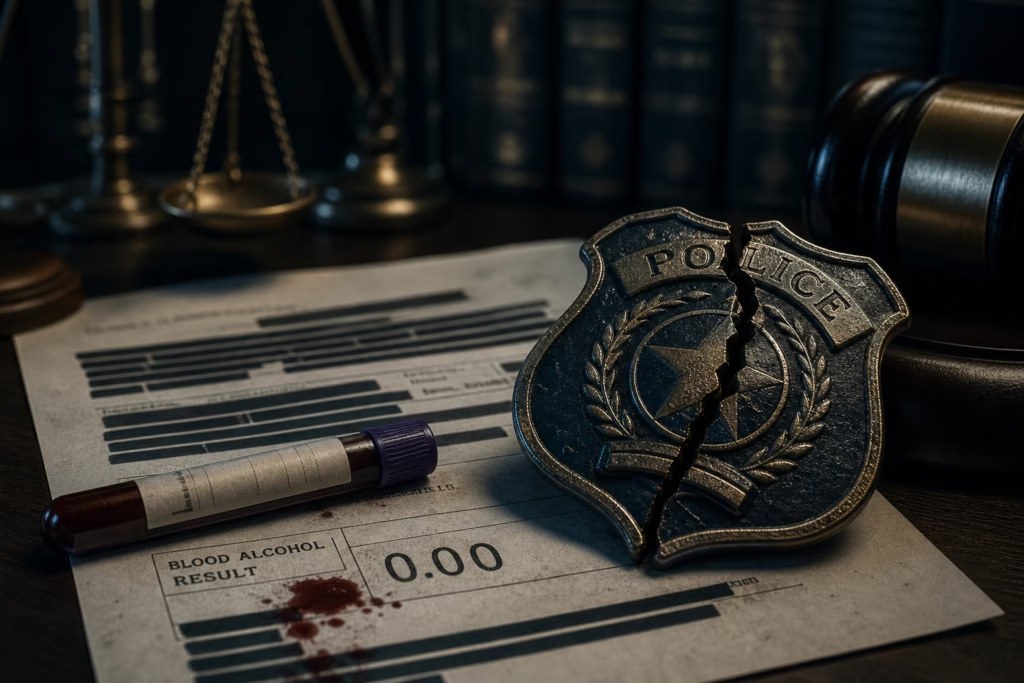
In a stunning concession buried in an eight-page reply brief, attorneys for the City of Galveston, Officer William Osteen, and Sergeant Jack Doraty have admitted that Osteen acknowledged on camera that he did not smell alcohol on the plaintiff’s breath—the same breath he swore under oath carried a “moderate” odor of alcohol.
The Reply That Backfired
On June 10, 2026, defense attorneys from Lewis Brisbois Bisgaard & Smith LLP filed Defendants’ Reply [Dkt. 79] in Reardon v. Osteen et al., Case No. 3:25-CV-203, pending in the United States District Court for the Southern District of Texas, Galveston Division. The reply was intended to support the defendants’ motion to dismiss all claims against them. It may have done the opposite. At paragraph 14, defendants argue that “Officer Osteen did not conceal exculpatory evidence” because he “expressly stated on the recordings that he did not smell alcohol on the Plaintiff’s breath, but most importantly Plaintiff was intoxicated on methamphetamines.” Read that again. Defendants have now told a federal court that their officer knew—at the time of the encounter—that the alcohol narrative was false. He said so on camera. And then he swore out a warrant affidavit checking “Moderate” odor of alcohol on breath, listing “slurred” speech, “dilated” pupils, and “heavy-footed” walking—every one of which he later contradicted under oath.The Timeline Defendants Won’t Address
The reply brief’s central strategy is to point to the methamphetamine toxicology result as a silver bullet that resolves every issue. But defendants never confront the timeline that their own exhibits establish:- September 6, 2023: First toxicology report issued. Result: zero blood alcohol content. Every alcohol observation in the warrant affidavit was objectively disproven.
- December 7, 2023: Grand jury returns felony DWI indictment. The only blood evidence in existence was the zero-BAC result. The drug toxicology report did not yet exist.
- February 1, 2024: Drug toxicology report finally issued—two full months after the indictment—showing 0.13 mg/L methamphetamine, a trace amount at or near the laboratory’s detection threshold.
Every Observation Reversed—From Depressant to Stimulant
Defendants spent four pages of their reply distinguishing Farhat v. State by arguing that Officer Osteen included “specific personal observations” in his warrant affidavit. They list eight Texas cases where officers’ observations supported probable cause. There is a critical distinction the reply ignores: in every one of those cases, the officer’s observations were undisputed. Here, Officer Osteen’s warrant affidavit observations have been contradicted—not by the plaintiff, but by Officer Osteen himself, under oath:| Warrant Affidavit | Sworn Testimony | Clinical Significance |
|---|---|---|
| “Dilated” pupils | “Pinpoint, very small” | Opposite pharmacological signs |
| “Slurred” speech | “Talking extremely fast” | Depressant vs. stimulant indicator |
| “Heavy-footed” walking | “Extremely jittery” | Motor depression vs. excitation |
| “Moderate” alcohol odor | Admitted no alcohol smell | Fabricated vs. actual observation |
The Breathalyzer Refusal That Speaks Volumes
One detail stands out above the rest. Officer Osteen admitted under oath that the plaintiff “was pretty adamant about wanting to use a breathalyzer” and “continued to state that he would do a breathalyzer over and over again.” Osteen refused, explaining that “the only thing a breathalyzer can test for is alcohol.” An officer who refuses to administer the fastest, least invasive test for the very substance he claims caused impairment—because he knows the suspect will pass—is not conducting a good-faith investigation. He is avoiding evidence that would expose his narrative as false. Under 42 U.S.C. § 1983, officers who fabricate evidence to support an arrest violate clearly established constitutional rights.The Klein v. Martin Misapplication
Defendants also invoked the Supreme Court’s recent decision in Klein v. Martin, 146 S. Ct. 589 (2026), arguing that the zero-BAC result was not “material” under Brady because the methamphetamine result provided “strong support” for conviction. This argument contains a fundamental category error. Klein was a post-conviction case analyzing whether undisclosed evidence undermined confidence in a verdict. There was no verdict in this case. There should not have been an indictment. The “strong support” defendants point to—the methamphetamine result—did not exist when the grand jury acted. Applying a post-conviction materiality standard to pre-indictment suppression is comparing apples to constitutional violations.What Happens Next
The plaintiff is filing a sur-reply to address the new arguments and mischaracterizations in defendants’ reply. The motion to dismiss remains pending before the court. All filings are available via PACER (Case No. 3:25-CV-203). The case continues to present a striking pattern: an officer who identified a citizen as a “First Amendment auditor” within seconds of contact, arrested him on fabricated alcohol observations, suppressed the exculpatory blood results, obtained a felony indictment on false pretenses, and then committed perjury in a related Mississippi proceeding—all while the citizen sat in pretrial detention for over seven months with his vehicle auctioned out from under him. This pattern of retaliation against journalists is documented extensively in the federal complaint. Now the defendants’ own attorneys have told a federal court that their officer knew the alcohol story was false all along. Some admissions cannot be walked back.Reardon v. Osteen et al., No. 3:25-CV-203 (S.D. Tex., Galveston Div.). All court filings referenced are available on PACER. Matthew Oliver Reardon is a journalist and First Amendment advocate. Follow developments at wtpnews.org.
Related Coverage
- Galveston Federal Lawsuit Enters Critical Phase as Defendants Move to Dismiss
- Galveston Staged Arrest Sparks Federal Civil Rights Lawsuit
- Federal Lawsuit Exposes Galveston-Mississippi Conspiracy to Falsely Imprison Journalist
- Journalist Returns to Galveston to Confront Police Over Corruption Scandal
- The Busby Files: Perjury, Fraud Upon the Court & Obstruction of Justice
Related Coverage
- Reardon Files Objections to Magistrate’s Recommendation in Galveston Federal Civil Rights Suit
- Docket Update: Entry #89 Filed in Reardon v. Osteen et al. (2026-07-06)
- Father Releases Emotional Dedication Song to Children, Calling It a “Blueprint to the Truth”
Legal & Records References
- Mississippi Public Records Act, Miss. Code Ann. § 25-61-1 et seq.
- U.S. Const. amend. I — First Amendment (Cornell LII)
Discover more from We The People News
Subscribe to get the latest posts sent to your email.
Leave a Reply